 GlucoSpike AI
CGM for Weight Loss: Does It Actually Work? (2026 Honest Guide)
CGMs are increasingly marketed for weight loss — but do they actually help you lose more weight? Here's what the research shows
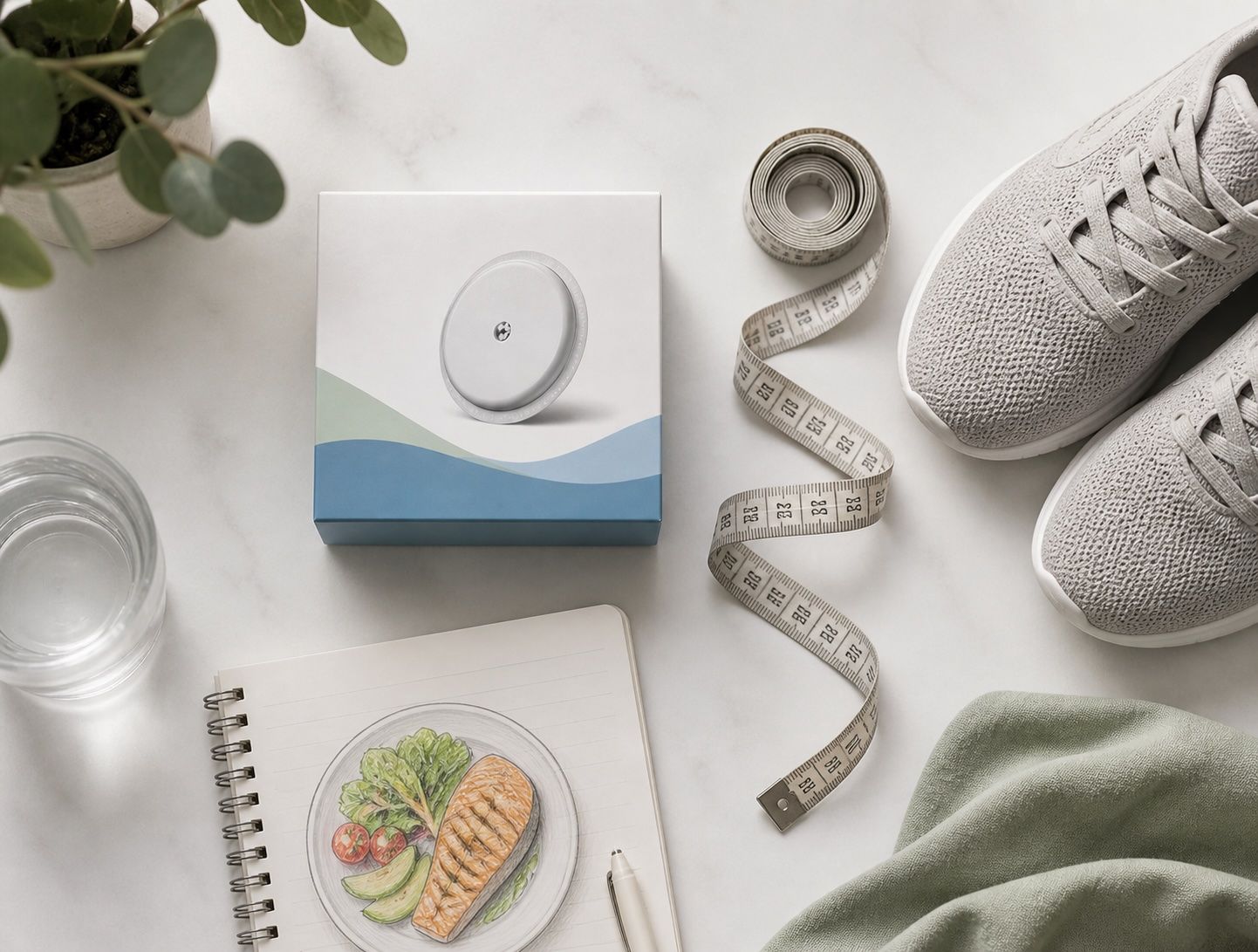
Continuous glucose monitors are increasingly being marketed to people without diabetes as a weight loss and metabolic health tool. Brands like Levels, Noom, and January AI have built entire businesses around this premise. Dexcom's OTC Stelo and Abbott's Libre Rio have made the hardware more accessible than ever before.
But does wearing a glucose monitor actually help you lose weight? The honest answer is more nuanced than the marketing suggests — and understanding the nuance could save you $1,000+ a year.
What a CGM Does (and What It Doesn't)
A continuous glucose monitor measures your interstitial glucose — the glucose in the fluid between your cells — and reports it continuously through a sensor you wear on your arm or abdomen. You get a real-time reading every 1–5 minutes, trend arrows showing whether glucose is rising or falling, and historical data to review patterns over time.
What a CGM doesn't do: it doesn't tell you what to eat, adjust your calorie intake, or directly cause fat loss. It's a data collection device. What you do with that data determines whether it changes anything at all.
The Theory: How CGMs Could Support Weight Loss
The proposed mechanism works like this:
Glucose spikes drive hunger and cravings. When blood sugar rises sharply after a meal and then drops rapidly, it triggers hunger signals — often leading to overeating or snacking sooner than intended. By identifying which meals cause spikes, you can adjust food choices to produce flatter glucose responses, which some research suggests reduces overall calorie intake through improved satiety.
Real-time feedback changes behavior. Seeing your glucose spike after a cookie in real time is more viscerally motivating than knowing abstractly that cookies are high in sugar. This behavioral feedback loop is the core CGM-for-weight-loss argument — making invisible consequences visible.
Individual glucose variability. Some foods spike one person's glucose significantly and barely affect another. CGMs can surface this individual variability, theoretically allowing for personalized dietary adjustments that generic dietary advice can't provide.
What the Research Actually Shows
The evidence for CGMs as a weight loss tool in non-diabetic adults is modest and mixed.
A study published in JAMA Internal Medicine in 2024 compared CGM users to a control group using standard dietary advice in adults with overweight and obesity but without diabetes. Both groups lost similar amounts of weight over 8 weeks, with no statistically significant advantage for CGM users in terms of body weight.
A separate study found that CGM feedback did improve dietary choices and reduced post-meal glucose variability in people with overweight — but again, weight loss outcomes were comparable to calorie tracking without a CGM.
Where CGMs show clearer benefit is in people who already have insulin resistance or prediabetes — where blood sugar regulation is impaired and glucose feedback is more clinically meaningful, directly connected to metabolic risk rather than just lifestyle optimization.
Bottom line from the research: CGMs don't reliably produce more weight loss than other dietary approaches for metabolically healthy people. Their value is primarily behavioral — making food-glucose connections visible — not a direct metabolic effect on fat loss.
Who Gets Real Value from a CGM for Weight Loss
People with insulin resistance or prediabetes. If your glucose regulation is already impaired, CGM feedback is more relevant and actionable. Seeing a significant post-meal spike has direct clinical meaning for your health trajectory — not just a lifestyle curiosity.
People who are highly data-driven. If you respond well to real-time feedback and enjoy tracking patterns, CGM data can sustain dietary discipline over time. Some people find the visibility genuinely motivating in a way that calorie apps don't provide.
People who have plateaued on other approaches. CGM data can sometimes surface a specific unexpected spike — from something you assumed was healthy — that explains a plateau. This discovery value is real but limited to the first few weeks of use.
Who Probably Won't Get Much Value
Metabolically healthy people without insulin resistance. If your glucose regulation is normal, the variability you'll see is relatively minor. The behavioral feedback may not be compelling enough to justify the cost.
People looking for passive weight loss. Wearing a CGM doesn't produce weight loss — acting on the data does. If you're not willing to actively analyze and adjust your diet based on what you see, the device is an expensive accessory.
People prone to health anxiety. CGMs generate continuous data, and glucose naturally fluctuates throughout the day. Seeing frequent spikes and dips can trigger disproportionate anxiety in people who are prone to health-related worry — the data becomes noise rather than signal.
The Cost Problem for Weight Loss Use Cases
For weight loss without a prescription need, your OTC options in 2026 are:
| Option | Monthly Cost | Annual Cost | Prescription Required | Hardware Needed |
|---|---|---|---|---|
| Dexcom Stelo | ~$99 | ~$1,188 | No | Yes |
| Abbott Libre Rio | ~$89–99 | ~$1,068–1,188 | No | Yes |
| FreeStyle Libre 3 Plus | ~$160 | ~$1,920 | Yes | Yes |
| Dexcom G7 | ~$350–400 | ~$4,200–4,800 | Yes | Yes |
| GlucoSpike AI (Spike Predictor) | ~$3.33 | ~$39.99 | No | No |
For most people using a CGM for weight loss rather than medical glucose management, $1,000+ per year is a significant spend with uncertain return. For a full breakdown of every device's pricing, see our complete CGM cost guide.
How Long Should You Use a CGM for Weight Loss?
Most of what you'll learn from a CGM for dietary purposes, you'll learn in the first 2 to 4 weeks. After that, new insights become increasingly marginal — you already know which foods spike you and which don't.
Some people use CGMs in periodic 2-week sessions rather than continuously — wearing one during a dietary experiment or plateau, then stopping until the next intervention. This approach gets the discovery value without the ongoing subscription cost.
How to Actually Use a CGM for Weight Loss (If You Try It)
Focus on post-meal patterns, not absolute numbers. A healthy post-meal glucose peak is generally below 140 mg/dL, returning to baseline within 2 hours. Chasing a perfectly flat line is neither realistic nor necessary — some variability is normal.
Use it to find your personal spike triggers. This is where CGMs deliver their clearest value — identifying specific foods that spike you unexpectedly. It might be white rice for one person and whole wheat bread for another. The personalization is the point.
Combine with meal sequencing. Eating fiber and protein before carbs consistently flattens post-meal glucose curves. CGM data lets you see the difference in real time — making the habit concrete and measurable. Our meal sequencing guide explains the approach and why it works.
Track post-meal walks. A 10-minute walk after eating significantly blunts glucose spikes by driving glucose into muscles. CGM feedback makes this visible and reinforces the habit with immediate data.
A More Affordable Starting Point
If your goal is understanding how your meals affect glucose to inform weight loss — rather than needing continuous 24/7 monitoring — a meal scoring approach is a better first step than a hardware subscription.
GlucoSpike AI scores every meal from 0 to 10 for predicted glucose impact without any hardware. You photograph or describe your meal and see which elements are driving glucose risk. At $39.99/year, it's about 3% of the annual cost of an OTC CGM and covers the meal-awareness use case directly — which is the primary weight loss use case for CGMs anyway.
Once you've established your food patterns through meal scoring, you can make a more informed decision about whether real-time continuous data is worth the additional cost. Most people find they get most of the value from the meal-level awareness without ever needing a sensor.
Frequently Asked Questions
Do CGMs help with weight loss?
CGMs can support weight loss by providing real-time glucose feedback that informs food choices, but research hasn't shown they produce more weight loss than other dietary approaches in metabolically healthy people. Their value is primarily behavioral — making food consequences visible — rather than a direct metabolic effect.
Can I use a CGM without diabetes for weight loss?
Yes. Dexcom Stelo and Abbott Libre Rio are FDA-approved over-the-counter CGMs that don't require a prescription or a diabetes diagnosis. They're specifically marketed for people interested in metabolic health and glucose awareness, including weight management goals.
How long should I wear a CGM for weight loss?
Most people gain the most useful new insights in the first 2 to 4 weeks of CGM use for dietary purposes. After your main food patterns are established, you'll see diminishing returns from continuous monitoring. Some people use periodic 2-week sessions rather than continuous wear — this gets the discovery value without the ongoing subscription cost.
What is a good glucose level for weight loss?
There's no specific glucose target for weight loss in non-diabetic people. Generally, keeping post-meal peaks below 140 mg/dL and avoiding sharp spikes followed by rapid drops is associated with better satiety and reduced cravings. Fasting glucose below 100 mg/dL indicates healthy baseline regulation. The goal is stability and smooth patterns rather than hitting a specific number.
What foods cause glucose spikes that drive weight gain?
Foods that cause the sharpest glucose spikes and the most significant subsequent drops — which drive hunger and overeating — tend to be high-glycemic refined carbohydrates: white bread, white rice, sugary drinks, processed snacks, and sweetened cereals. The spike-and-crash pattern triggers hunger signals that lead to consuming more calories than intended.
Is a CGM worth it for weight loss without diabetes?
For most people without diabetes or insulin resistance, the $1,000+ annual cost of an OTC CGM is difficult to justify for weight loss alone — research shows similar outcomes with other dietary approaches. The exception is people who are highly data-motivated or have suspected insulin resistance. A meal scoring tool is a more cost-proportionate starting point for most people.
Does continuous glucose monitoring reduce appetite?
Not directly. The device itself doesn't affect appetite. However, by identifying and reducing the foods that cause sharp glucose spikes and subsequent crashes, CGM users often report more stable hunger levels and fewer cravings throughout the day — which indirectly supports lower calorie intake over time.
What is the difference between a CGM and a blood glucose meter for weight loss?
A blood glucose meter (BGM) gives you a single point-in-time reading when you test — typically 1 to 4 times per day. A CGM gives you continuous readings every 1 to 5 minutes with trend arrows showing the direction of change. For weight loss purposes, the trend and pattern data from a CGM is more useful than isolated BGM readings, but a BGM is far cheaper for occasional use.
Can a CGM help me understand why I'm not losing weight?
Sometimes. If you've plateaued on a diet, a CGM can surface unexpected glucose spikes from foods you assumed were low-glycemic — whole wheat bread, oat milk, certain fruits — that might be driving hunger and calorie intake. This discovery value is real but is typically captured in the first 2 to 4 weeks of use, not from ongoing monitoring.
🥗 Get weekly blood sugar tips from GlucoSpike
Practical meal tips, glucose-friendly recipes, and app updates — straight to your inbox. No spam.