 GlucoSpike AI
Does Sourdough Bread Spike Blood Sugar Less Than Regular Bread?
Sourdough has a real metabolic advantage over regular bread — but only the traditionally fermented kind. Here's the science, what to look for on labels, and what the GlucoScore shows.
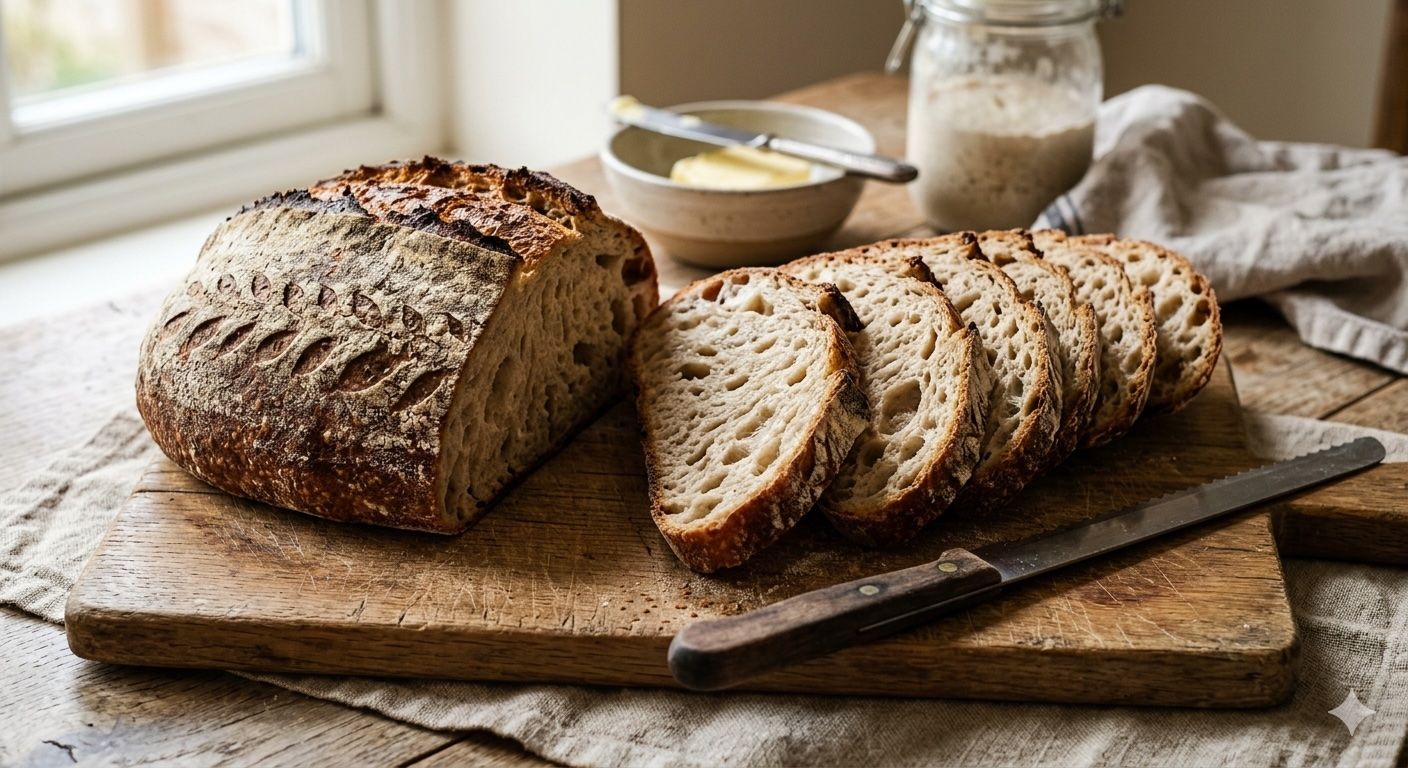
Short answer: Yes — real sourdough does spike blood sugar less than regular white bread. But most commercial sourdough sold in supermarkets isn't real sourdough. If you're buying a loaf with "sourdough" on the label and it has a soft, pillowy texture with a 2-day shelf life, it's almost certainly not the fermented kind that offers blood sugar benefits.
GlucoScore comparison:
- White sandwich bread (2 slices): 3/10
- Commercial "sourdough" (2 slices): 3–4/10 (minimal real benefit)
- Traditional long-fermented sourdough (2 slices): 5/10
- Sourdough toast + eggs + avocado: 7/10
Why Real Sourdough Is Different
Traditional sourdough is made through a slow fermentation process using wild yeast and lactic acid bacteria. During fermentation (which can take 12–48+ hours), several changes happen that reduce the blood sugar impact:
1. Organic acids lower the GI
The lactic and acetic acids produced during fermentation lower the pH of the bread, which slows starch digestion. The bread's glycemic index drops meaningfully compared to non-fermented bread made from the same flour.
2. Phytic acid is broken down
Fermentation reduces phytic acid, an anti-nutrient that blocks mineral absorption. This actually improves the nutritional profile of sourdough vs. regular bread.
3. Starch structure changes
The long fermentation alters how starch granules are organized, making some of it more resistant to digestion — behaving more like resistant starch than rapidly digestible starch.
Studies show that traditionally fermented sourdough can have a GI of 48–60, compared to 70–75 for white bread — a meaningful difference for blood sugar management.
The Supermarket Sourdough Problem
Most store-bought "sourdough" is not traditionally fermented. Manufacturers add vinegar or citric acid for sour flavor and use commercial yeast to speed up baking. The fermentation time is a few hours at most, or skipped entirely. The blood sugar benefits of real fermentation are largely absent.
How to tell the difference:
- Real sourdough ingredients: flour, water, salt, sourdough starter (sometimes listed as "cultured wheat flour" or "live cultures")
- Fake sourdough ingredients: flour, water, yeast, vinegar, citric acid, dough conditioners, ascorbic acid
- Real sourdough goes stale in 2–3 days; commercial sourdough stays soft for weeks
- Real sourdough has an irregular, airy crumb; commercial sourdough has an even, sandwich-bread texture
🥗 Get weekly blood sugar tips from GlucoSpike
Practical meal tips, glucose-friendly recipes, and app updates — straight to your inbox. No spam.