 GlucoSpike AI
Does White Rice Spike Blood Sugar? (Yes — Here's What to Do)
White rice causes one of the fastest glucose spikes of any common food. Here's why, what the GlucoScore says, and exactly how to eat it with a lower spike.
Short answer: Yes. White rice causes a significant blood sugar spike in most people — faster than white bread in some studies. If you're managing prediabetes, Type 2 diabetes, or just trying to keep your energy stable, white rice eaten alone is one of the highest-risk foods on your plate.
But it doesn't have to be off the table. How you eat it matters as much as whether you eat it.
GlucoScore for plain white rice (150g serving): 2–3 out of 10. A lower score means a higher glucose impact. White rice eaten alone scores near the bottom.
Why Does White Rice Spike Blood Sugar So Fast?
White rice is essentially starch with the fiber, bran, and germ removed. Without those buffers, your digestive system breaks it down into glucose almost immediately.
Here's what happens in your body within 30–45 minutes of eating plain white rice:
- Starch converts rapidly to glucose in the small intestine
- Blood glucose rises sharply (often peaking 30–45 minutes after eating)
- Your pancreas releases a surge of insulin to manage the spike
- Blood sugar then drops — often below baseline, causing hunger and energy crashes
The glycemic index (GI) of white rice is around 72–75 — classified as high. For context, table sugar has a GI of about 65. White rice hits your blood sugar harder than you might expect.
White Rice vs. Brown Rice: The GlucoScore Difference
Brown rice retains its bran and germ, which means more fiber, more protein, and a slower digestion rate.
| Food | GlucoScore | Key Reason |
|---|---|---|
| White rice (150g, plain) | 2–3/10 | No fiber, rapid starch conversion |
| Brown rice (150g, plain) | 5–6/10 | More fiber, slower digestion |
| White rice + dal/lentils | 5–6/10 | Protein + fiber buffer the spike |
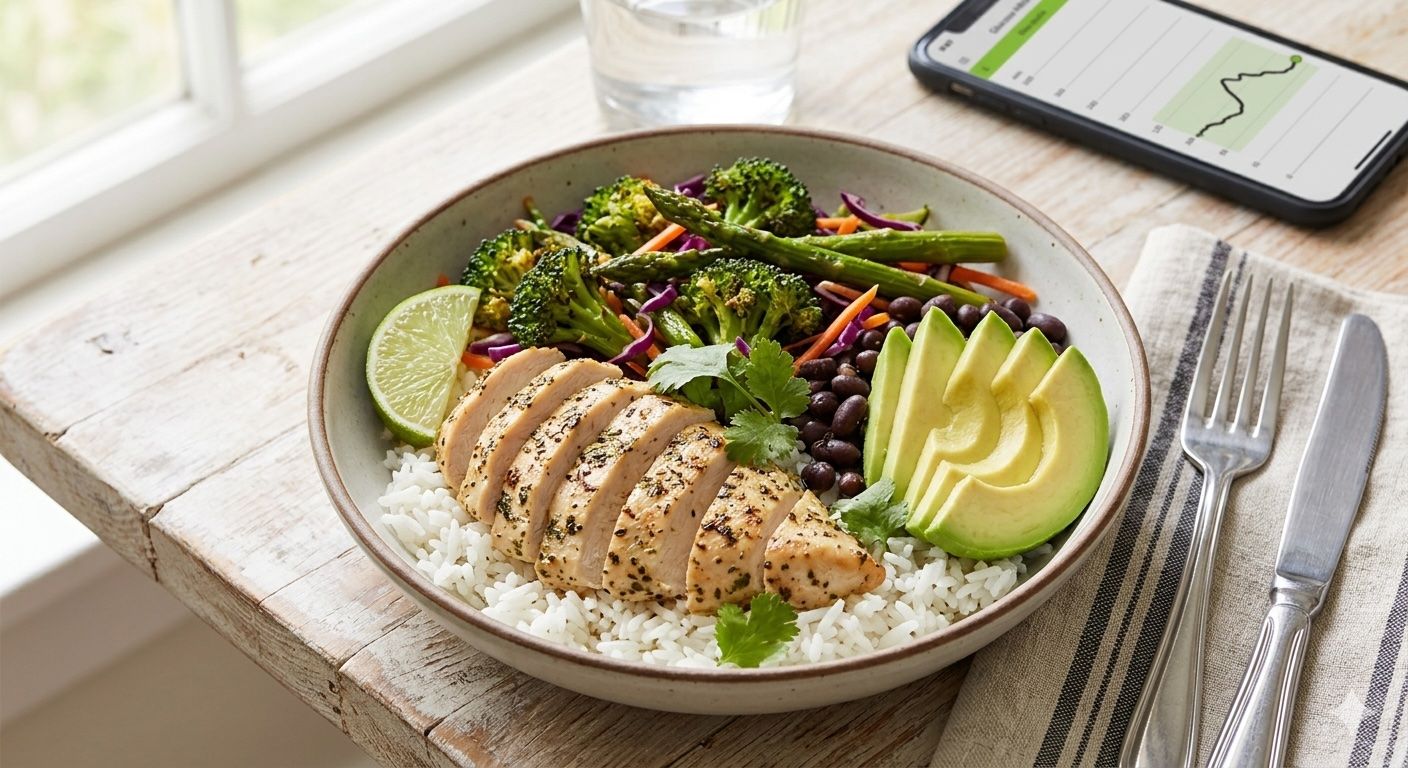
| White rice + grilled chicken + salad | 6–7/10 | Full protein-fiber-carb sequence |
The food hasn't changed. The score changes based on what's around it.
5 Ways to Eat White Rice With a Lower Glucose Spike
You don't have to give up rice. These strategies can meaningfully reduce how high your blood sugar goes after a rice-based meal:
1. Eat it last (meal sequencing)
Eat vegetables and protein first, then rice. Research shows this alone can cut post-meal glucose spikes by 30–40% compared to eating rice first on an empty stomach. Your gut releases GLP-1 when it sees fiber and protein first, which slows glucose absorption from everything that follows.
2. Pair it with protein and fiber
A bowl of plain white rice is a problem. White rice + grilled fish + a side salad is a completely different metabolic event. The protein and fiber slow gastric emptying and blunt the glucose rise.
3. Cool it before eating
Cooked and cooled rice (even reheated) develops resistant starch, which is digested more slowly than freshly cooked rice. Studies suggest this can reduce the glycemic impact by 10–15%.
4. Use smaller portions
Total glucose load matters. A 75g serving of white rice hits very differently than 200g. Pair a smaller portion with more vegetables to fill the same plate volume.
5. Add fat or acid
A drizzle of olive oil, a squeeze of lemon, or a serving of yogurt alongside rice can slow gastric emptying and reduce the peak glucose response.
Does Jasmine Rice or Basmati Rice Spike Blood Sugar Less?
Yes — slightly. Basmati rice has a lower GI (around 55–60) compared to regular long-grain white rice due to its higher amylose content, which is digested more slowly. Jasmine rice is closer to regular white rice (GI ~65–70).
For blood sugar management, basmati is a meaningfully better swap if you're not ready to move to brown rice.
Who Needs to Be Most Careful?
White rice is especially worth watching if you:
- Have prediabetes or Type 2 diabetes
- Have been told your A1C is elevated
- Experience energy crashes 1–2 hours after carb-heavy meals
- Have PCOS (insulin resistance is common in PCOS)
- Are working on weight loss and notice afternoon hunger patterns
For everyone else, occasional white rice eaten alongside protein and vegetables is unlikely to cause lasting harm — the context of the meal matters more than the rice alone.
Frequently Asked Questions
Does white rice spike blood sugar more than bread?
In many cases, yes. White rice has a glycemic index of 72–75, while white bread is around 70–75. The difference is small, but white rice is often eaten in larger portions, making the total glycemic load higher.
Is rice bad for diabetics?
Not inherently, but the quantity and context matter enormously. Plain white rice in large portions is one of the most problematic foods for blood sugar management. Small portions of white rice eaten after vegetables and protein — especially basmati — can be included in a diabetes-friendly meal pattern.
What is the lowest-sugar type of rice?
Brown rice, wild rice, and basmati rice all have lower glycemic impact than regular white rice. Among white rice varieties, basmati is the best choice for blood sugar control.
Can I eat rice if I have prediabetes?
Yes, but strategically. Focus on smaller portions, choose basmati or brown rice, and always eat it alongside protein and vegetables rather than alone. Meal sequencing (vegetables and protein first, rice last) is especially effective.
How do I know if rice is spiking my blood sugar?
Without a CGM, it's hard to know exactly. GlucoSpike AI predicts the glucose impact of your meals — including rice-based dishes — and shows you a GlucoScore (0–10) so you can compare options and make adjustments without guesswork.
Want to see how your rice-based meals score? GlucoSpike AI analyzes any meal and gives you a GlucoScore in seconds — no sensors required. Download on the App Store or Google Play.
🥗 Get weekly blood sugar tips from GlucoSpike
Practical meal tips, glucose-friendly recipes, and app updates — straight to your inbox. No spam.