 GlucoSpike AI
Does White Rice Spike Blood Sugar? Yes—Here's Why
White rice can cause sharp blood sugar spikes because it's low in fiber and high in rapidly digested starch. Learn why it happens, how it compares to brown rice, and how to use pairing strategies.
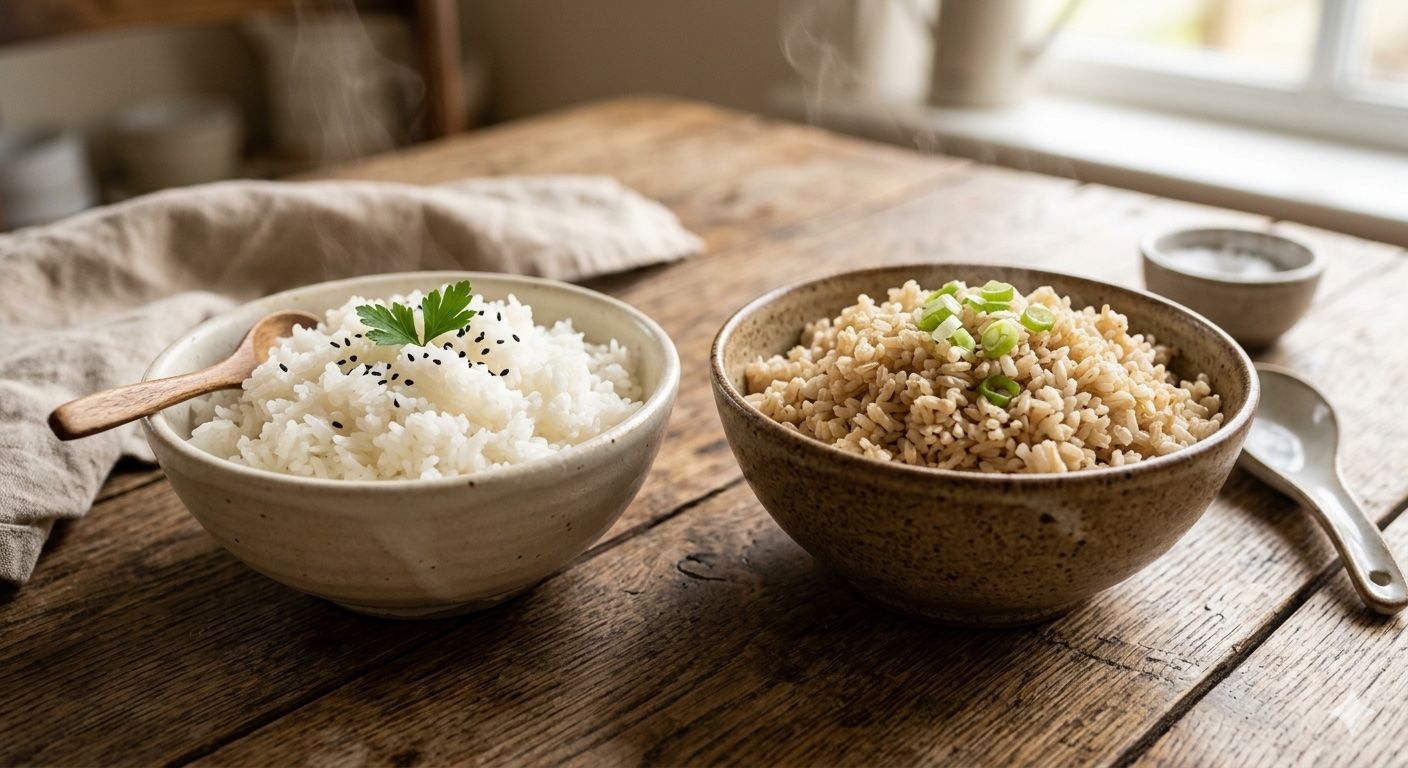
Does White Rice Spike Blood Sugar? Yes—Here's Why
Yes, white rice spikes your blood sugar—often significantly. If you've ever felt that post-meal energy crash after a big bowl of white rice, that's your glucose spiking and then dropping. But understanding why it happens is the key to managing it. This post breaks down the science behind white rice and blood sugar, shows you how it compares to other options, and gives you a practical framework (through GlucoScore) for making smarter choices at every meal.
Why White Rice Causes Blood Sugar Spikes
White rice is stripped of its bran and germ during processing, removing most of the fiber and many nutrients. Without fiber to slow digestion, your body rapidly converts the starch into glucose. The result is a fast, sharp blood sugar spike followed by a crash.
This effect is captured by glycemic load—a measure of how much glucose your body has to process from a typical serving and how quickly it hits your bloodstream.
- White rice is mostly refined starch.
- Low fiber = faster digestion.
- Faster digestion = rapid glucose release.
- Rapid glucose release = higher spike and steeper crash.
The Role of Glycemic Load and Fiber
Glycemic index (GI) tells you how quickly a food raises blood sugar per gram of carbohydrate, but glycemic load (GL) accounts for both the quality and the quantity of carbs in a typical serving.
- White rice has a high glycemic load (roughly 15–20 per cup cooked), because you usually eat a substantial portion of refined carbs at once.
- The missing fiber is the main culprit. Fiber acts like a biological speed bump—it slows digestion and delays glucose absorption.
Compare that to brown rice:
- Brown rice fiber: ~3.5 g per cooked cup
- White rice fiber: ~0.6 g per cooked cup
That extra fiber in brown rice helps flatten the glucose curve, leading to a more gradual rise and a smaller crash.
White Rice vs. Brown Rice: A Direct Comparison
White rice
- High glycemic load
- Rapid digestion
- Fast spike, sharp drop
- Classic "blood sugar roller coaster"—energy surge, then crash
Brown rice
- Lower glycemic load than white rice
- More fiber and nutrients
- More gradual rise in blood sugar
- Smoother, more stable glucose curve
White rice + protein/fat
The story changes when you look at the meal, not just the rice.
- Add protein (chicken, fish, eggs, tofu) and healthy fats (olive oil, avocado, nuts).
- Protein and fat slow gastric emptying and digestion.
- This reduces the speed and height of the glucose spike, even if the amount of rice stays the same.
In other words, the same bowl of white rice can behave very differently depending on what you eat with it.
The Practical Fix: Pair, Don't Eliminate
You don’t have to give up rice to manage your blood sugar more effectively. Instead, focus on context and composition:
Pair with protein
- Examples: chicken, salmon, tofu, tempeh, eggs, Greek yogurt-based sauces.
- Aim to cover at least a quarter of your plate with protein.
Add healthy fats
- Examples: olive oil, avocado, nuts, seeds, tahini, full-fat yogurt.
- Use them in dressings, sauces, or toppings.
Add fiber and volume
- Load your plate with non-starchy vegetables (broccoli, leafy greens, peppers, cucumbers, cauliflower, etc.).
- Consider beans or lentils for extra fiber and protein.
Try a rice blend
- Go 50/50 white and brown rice to keep the texture you like while improving fiber and lowering glycemic load.
Adjust portion size
- Smaller portions of white rice paired with more protein, fat, and fiber can dramatically change your glucose response.
Personalizing It with GlucoScore
Everyone’s glucose response is slightly different. Two people can eat the same bowl of rice and have very different spikes. That’s where GlucoScore comes in.
With GlucoScore, you can:
- See how plain white rice affects your glucose.
- Compare it to white rice + protein/fat.
- Test brown rice or 50/50 blends.
- Log different portion sizes and meal combinations.
Over time, you build a personal map of which meals keep your blood sugar stable and which ones send it on a roller coaster.
Conclusion
White rice does spike blood sugar, but the size and shape of that spike depend heavily on what else you eat with it and how much you eat. Understanding glycemic load and the importance of fiber, protein, and fat lets you keep rice in your life while avoiding the energy crashes.
Use pairing strategies, adjust portions, and lean on tools like GlucoScore inside the GlucoSpike app to see the exact glucose impact of your favorite meals. That data helps you build a sustainable eating pattern that keeps your blood sugar—and your energy—more stable.
See the GlucoScore for any meal — download GlucoSpike.
🥗 Get weekly blood sugar tips from GlucoSpike
Practical meal tips, glucose-friendly recipes, and app updates — straight to your inbox. No spam.