 GlucoSpike AI
Vegetables First, Rice Later: The Simple Eating Trick That Lowers Your Blood Sugar
Eating vegetables before rice isn't just a health tip — it's backed by clinical research. Here's why the order you eat matters, and how to use it at every meal.
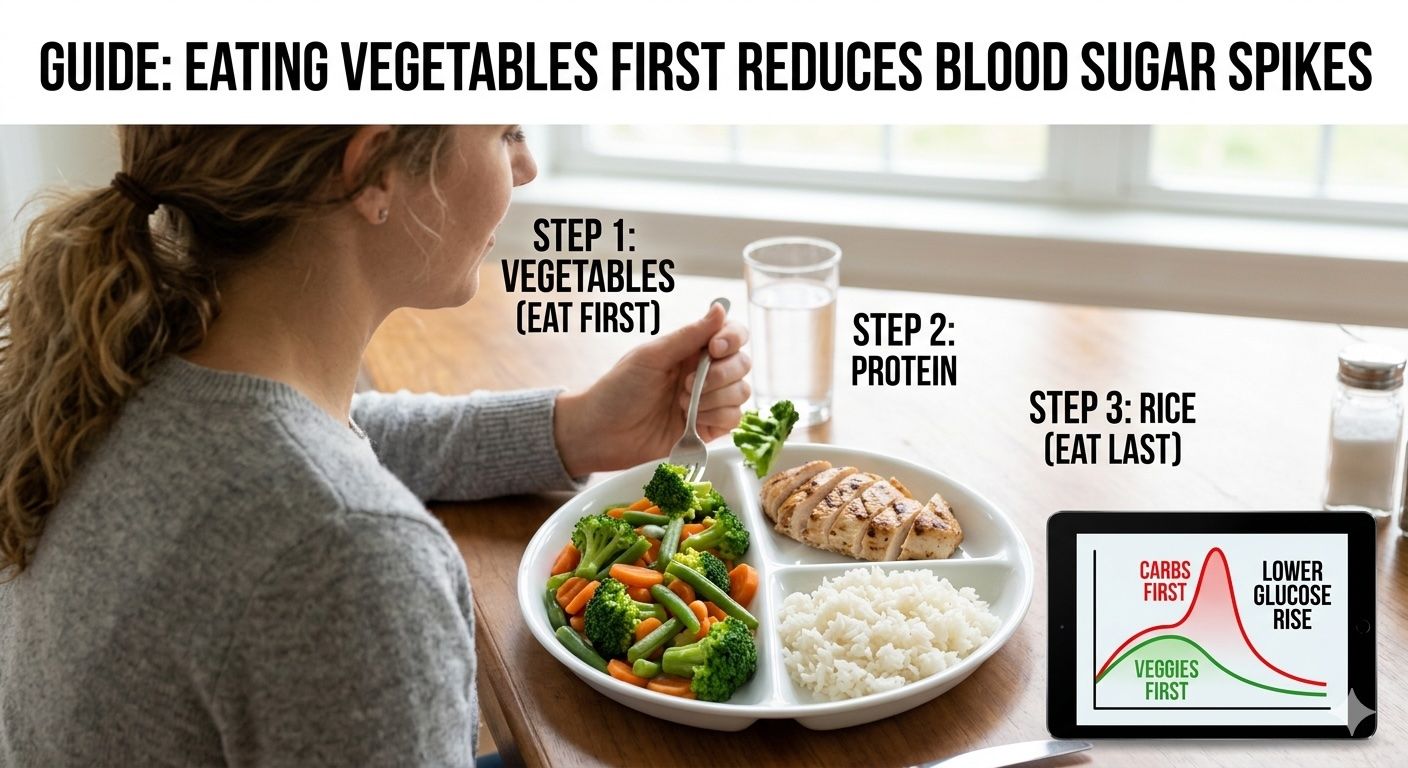
Most blood sugar advice focuses on what to eat. Cut the carbs. Swap white rice for brown. Avoid sugar.
But there's a simpler lever that almost nobody talks about: the order you eat your food. And the research behind it is stronger than most nutrition advice you'll come across.
Eating your vegetables first — before rice, bread, or any starchy carbohydrate — can meaningfully reduce how high your blood sugar goes after that exact same meal. No substitutions. No smaller portions. Just a different order.
Key finding from research: Eating vegetables before “meat and rice” was more effective at reducing postprandial glucose than eating all components simultaneously. The best outcome came from eating vegetables first, then meat, then rice last. (Source: PMC7551485)
Why Does Eating Vegetables First Actually Work?
The mechanism isn’t magic — it’s physiology.
When you eat fiber-rich vegetables first, several things happen before the carbohydrates even arrive in your digestive system:
1. Your stomach slows down
Dietary fiber increases the viscosity of your stomach contents and delays gastric emptying — the rate at which food leaves your stomach and enters the small intestine. Slower gastric emptying means glucose enters your bloodstream more gradually.
2. Your gut releases protective hormones
Eating vegetables and protein before carbs stimulates the release of GLP-1 (glucagon-like peptide-1), a hormone that blunts post-meal glucose spikes, suppresses glucagon (which raises blood sugar), and tells your brain you’re full. GLP-1 is the same hormone that Ozempic and Wegovy are designed to mimic — but you can trigger it naturally through food order.
3. The carbs arrive into a prepared gut
By the time rice or bread hits your small intestine, fiber and protein have already created a physical buffer. Glucose is still absorbed — but gradually, not in a rush. The result is a flatter glucose curve and no crash.
What the Research Actually Shows
A review published in Nutrients (PMC7551485) examined multiple clinical studies on meal sequence. One study directly compared eating vegetables before “meat and rice” versus eating everything together — and found that separating the components and eating vegetables first produced the greatest reduction in postprandial glucose elevation.
The study also found that eating vegetables → meat → rice (in that order) outperformed eating meat and vegetables together first. The sequence matters, not just the separation.
Longer-term data backs this up too: patients with Type 2 diabetes who were instructed to eat vegetables before carbohydrates showed significant improvement in HbA1c — the 3-month average blood sugar marker — compared to those on conventional dietary advice.
The GlucoScore Difference: Same Meal, Different Order
Here’s what this looks like in GlucoSpike terms. Take a standard Indian lunch: dal, sabzi (vegetable curry), and rice.
| Eating Order | GlucoScore | Why |
|---|---|---|
| Rice first, then dal + sabzi | 3–4/10 | Carbs hit an empty stomach — rapid glucose surge |
| All together, simultaneously | 4–5/10 | Some buffer, but diluted effect |
| Sabzi first → dal → rice last | 6–7/10 | Full fiber-protein buffer before carbs arrive |
Same ingredients. Same quantities. The score changes entirely based on order.
This is exactly what GlucoSpike is built to show you — not just what’s in the meal, but how the context (pairing, sequence, portion) changes the predicted glucose impact.
How to Apply This at Every Meal
The rule is simple: eat your lowest-carb, highest-fiber foods first. Eat your starchiest foods last.
Western meals
Start with your side salad before the main. Eat the protein (chicken, fish, eggs) before the pasta, bread, or potato. If it’s a sandwich, eat some of the fillings first before the bread.
Rice bowls and grain bowls
Hard to fully separate, but: eat any leafy greens or roasted veggies you can pick out first. Then the protein. Then the grain base. Even partial sequencing helps.
Breakfast
Eat eggs, Greek yogurt, or nuts before your oatmeal, toast, or fruit. Even a few bites of protein before the carbs matters.
Do You Have to Be Perfect?
No — and this is important. The research shows meaningful benefit even from partial sequencing. You don’t need separate courses or a timer.
The practical version: just make a habit of taking a few bites of vegetable or protein before you dig into the starchy part of your plate. That’s it.
Who Benefits Most
This strategy is especially impactful if you:
- Have been diagnosed with prediabetes or Type 2 diabetes
- Have PCOS with insulin resistance
- Experience post-meal energy crashes or afternoon slumps
- Are trying to lose weight and notice strong hunger returning within 2 hours of eating
- Regularly eat rice, roti, pasta, or bread as a main component of meals
For everyone else, it’s still a worthwhile habit — a low-effort tweak that compounds over hundreds of meals per year.
Frequently Asked Questions
Does eating vegetables before rice actually lower blood sugar?
Yes, according to multiple clinical studies. Research shows that eating vegetables before carbohydrates reduces post-meal glucose elevation compared to eating all components simultaneously. The fiber and protein in vegetables trigger hormones that slow carbohydrate absorption.
How long before eating carbs should I eat vegetables?
You don’t need a strict time gap. Eating vegetables at the start of the same meal — even just a few minutes before reaching for the rice or bread — provides meaningful benefit. Studies showing the strongest effects used a 15–30 minute gap between courses, but everyday meal sequencing (starting with salad before pasta) still helps significantly.
Does vegetable order matter if I’m eating a mixed dish?
Partially. With a curry, stew, or stir fry where everything is mixed, you won’t get the full benefit. But starting the meal with a side salad or a serving of raw vegetables before the main dish still buffers the carbohydrate load. Partial sequencing is better than no sequencing.
Is this the same as “carbs last”?
Yes — carbs last, fiber first, and protein in the middle is the same concept by different names. Meal sequencing, food order, and carbs-last all refer to the same evidence-based strategy.
How does GlucoSpike help with meal sequencing?
When you log a meal in GlucoSpike, the app scores the full meal context — not just ingredients. You can log the same meal in different sequences and see how the GlucoScore changes. Over time, the app also flags meals that are missing protein or fiber, which is the signal that sequencing would help the most.
Want to see how meal order changes your GlucoScore? Download GlucoSpike AI — no CGM required. App Store · Google Play
🥗 Get weekly blood sugar tips from GlucoSpike
Practical meal tips, glucose-friendly recipes, and app updates — straight to your inbox. No spam.