 GlucoSpike AI
What Is GLP-1 and Why Does It Matter for Your Blood Sugar After Meals?
GLP-1 is the hormone behind Ozempic, Wegovy, and a new era of metabolic drugs. But your body makes it naturally — and what you eat, and when you eat it, changes how much you produce.
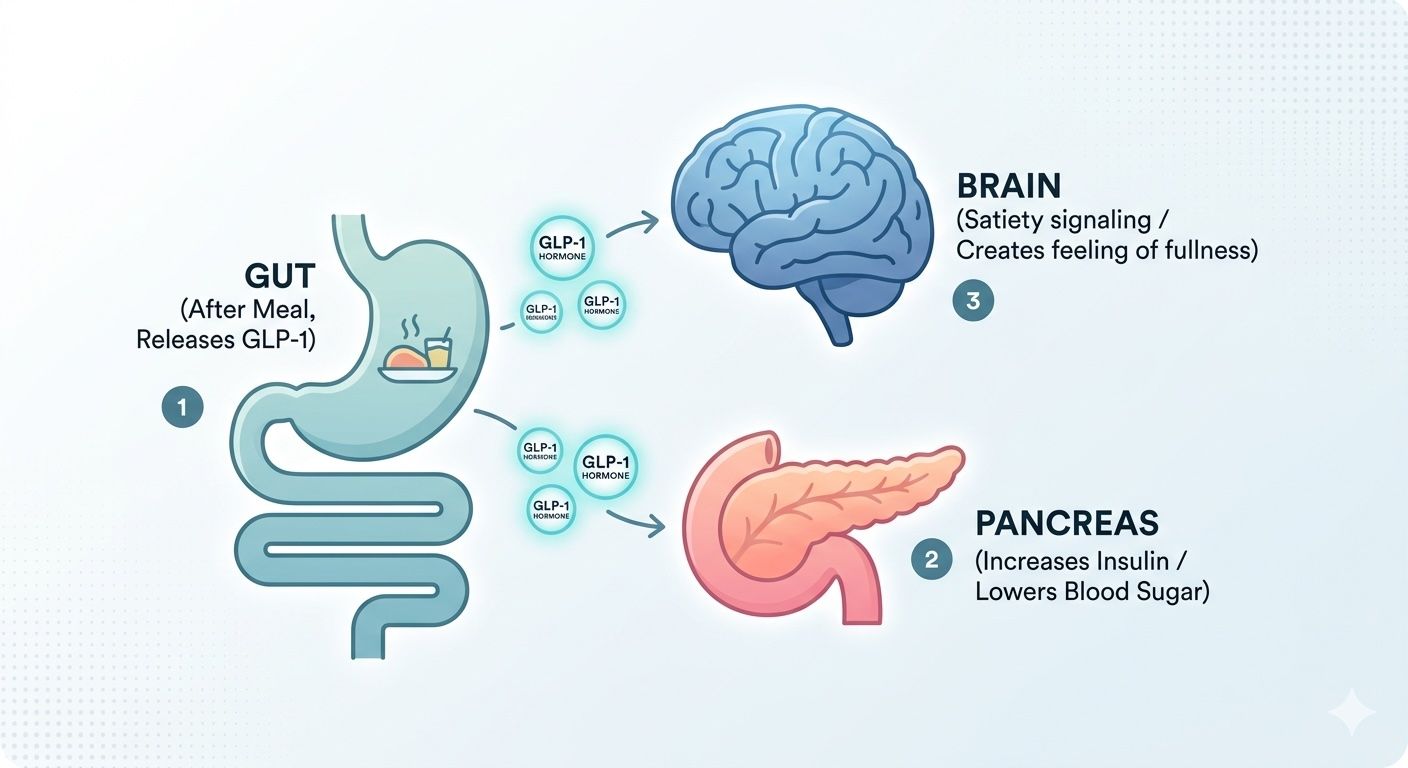
You've probably heard of Ozempic. Maybe Wegovy. Perhaps Mounjaro. These drugs are dominating health conversations — and they all work by targeting the same hormone: GLP-1.
What's less discussed is that GLP-1 isn't a pharmaceutical invention. It's a hormone your body already produces naturally, every time you eat. The drugs are simply synthetic versions designed to mimic it.
The implications of that fact are significant: if food triggers GLP-1, then what you eat and when you eat it directly influences how much of this powerful metabolic hormone your body releases. And that, in turn, determines how well your blood sugar is managed after every meal.
From the research: GLP-1 is secreted from the gut in response to ingestion of nutrients (carbohydrate, protein, and fat), stimulates insulin secretion, suppresses glucagon, delays gastric emptying, and suppresses appetite by acting on the hypothalamus via the afferent vagus nerve. (Source: PMC7551485)
What GLP-1 Actually Does
GLP-1 (Glucagon-Like Peptide-1) is a hormone secreted by L-cells in your small intestine when they detect incoming food. It performs several functions simultaneously — and all of them are beneficial for blood sugar management:
1. Stimulates insulin release (glucose-dependently)
GLP-1 triggers your pancreas to release insulin — but only when blood glucose is actually elevated. This glucose-dependent mechanism is important: it means GLP-1-triggered insulin doesn't cause hypoglycemia (dangerously low blood sugar) the way some diabetes medications can.
2. Suppresses glucagon
Glucagon is the hormone that signals your liver to release stored glucose into the bloodstream. GLP-1 suppresses glucagon secretion, which prevents this additional glucose dump after meals — a significant contributor to post-meal spikes.
3. Delays gastric emptying
GLP-1 slows the rate at which your stomach empties food into the small intestine. Slower gastric emptying = slower glucose absorption = flatter post-meal glucose curve.
4. Suppresses appetite
GLP-1 acts on the hypothalamus via the vagus nerve to reduce hunger and increase feelings of fullness. This is why GLP-1 receptor agonist drugs cause such significant weight loss — the appetite suppression is powerful enough that people naturally eat far less.
5. Protective effects beyond glucose
Animal and human studies suggest GLP-1 has protective effects on the heart, kidneys, and nervous system. Some GLP-1 receptor agonists have been shown to reduce cardiovascular events in high-risk Type 2 diabetes patients.
Why GLP-1 Drugs Work — And What They're Missing
Natural GLP-1 is degraded very rapidly in your bloodstream — within 1–2 minutes of release. This is why the hormone has a powerful effect during a meal but doesn't stay elevated for hours afterward.
GLP-1 receptor agonist drugs (semaglutide, liraglutide, tirzepatide) are designed to be resistant to this breakdown. They stay active for days or weeks, keeping GLP-1 signaling continuously elevated. That's what produces the sustained weight loss and blood sugar improvement in clinical trials.
The trade-off: they're expensive, often not covered by insurance, require weekly injections, and come with side effects (nausea, vomiting, and in some cases more serious concerns).
How You Can Naturally Boost GLP-1 Through Food and Meal Order
You can't replicate the pharmacological GLP-1 elevation from drugs through diet alone. But you can meaningfully increase the natural GLP-1 response from your meals — and the strategy is simpler than most people expect.
Eat protein and fat before carbohydrates
This is the most well-documented food-based GLP-1 enhancer. When protein and fat reach your small intestine before carbohydrates, the L-cells release more GLP-1 than if carbohydrates arrive first or simultaneously.
Clinical research shows that eating protein (especially whey, fish, eggs) or fat (especially unsaturated fats from fish and olive oil) before a carbohydrate meal significantly enhances GLP-1 secretion, delays gastric emptying, and reduces post-meal glucose — exactly the cascade that makes GLP-1 drugs effective, triggered naturally by food sequence.
Eat fiber-rich vegetables first
Dietary fiber also stimulates GLP-1 — through a different mechanism than protein. Fermentable fiber reaches your colon and is converted by gut bacteria into short-chain fatty acids (SCFAs), which stimulate GLP-1 release. Eating fiber first ensures maximum exposure before carbohydrates arrive.
Prioritize fermented foods
Fermented foods (yogurt, kefir, kimchi, sauerkraut) support gut bacteria diversity, which is associated with better GLP-1 response over time.
Eat slowly
Eating rate affects how much GLP-1 is released. Slower eating gives L-cells more time to sense incoming nutrients and release GLP-1 before carbohydrates flood the system.
The "Natural Ozempic" Conversation
You may have seen content online about "natural Ozempic" — foods or habits that supposedly mimic the drug. This framing is mostly hype, but it's rooted in something real: yes, certain dietary patterns do stimulate GLP-1 more than others.
The honest summary:
- Dietary GLP-1 stimulation is real but modest compared to pharmaceutical GLP-1 agonists
- It won't cause 15–20% body weight loss the way semaglutide can
- But it does produce measurable reductions in post-meal glucose spikes, improvements in satiety, and over months and years, meaningful metabolic benefit
- For people who can't access or don't want GLP-1 drugs, it's the most evidence-based dietary tool available
GlucoSpike is built on this principle: the GlucoScore predicts the glucose impact of your meal accounting for how protein, fiber, fat, and sequencing affect the real-world glucose response — which is largely mediated through GLP-1 and gastric emptying dynamics.
GLP-1 and Meal Sequencing: The Connection
The reason meal sequencing works as well as it does is largely because of GLP-1. When you eat protein and vegetables before carbohydrates:
- Protein hits the gut first → GLP-1 is released
- GLP-1 slows gastric emptying before carbs arrive
- GLP-1 triggers early insulin release
- GLP-1 suppresses glucagon
- Carbs arrive into a system already prepared → flatter glucose curve
Change the order — carbs first — and none of steps 1–4 happen before the glucose hits. Your blood sugar rises faster and higher.
Frequently Asked Questions
What is GLP-1 in simple terms?
GLP-1 is a gut hormone released when you eat. It helps your body manage blood sugar by triggering insulin, blocking glucagon, slowing stomach emptying, and reducing appetite. It's the hormone that GLP-1 drugs like Ozempic are designed to mimic.
Does food naturally boost GLP-1?
Yes — protein, fat, and fiber all stimulate GLP-1 secretion from your gut when they arrive in your small intestine. The effect is strongest when these nutrients arrive before carbohydrates. Eating protein or fat first, then carbs last, produces the highest GLP-1 response from a given meal.
Is there a natural way to get the Ozempic effect?
No — the sustained, pharmacological GLP-1 elevation from semaglutide can't be replicated through diet. But dietary GLP-1 stimulation through protein-first, fiber-first eating does produce meaningful reductions in post-meal blood sugar, improved satiety, and better metabolic markers over time. It's a complementary strategy, not a pharmaceutical replacement.
Does GLP-1 affect weight loss?
Yes — GLP-1 suppresses appetite by acting on the hypothalamus. This is why GLP-1 drugs cause significant weight loss. Naturally stimulating GLP-1 through meal composition and sequencing produces more modest appetite suppression, but consistent enough to support gradual, sustainable weight management.
How does GlucoSpike use GLP-1 principles?
GlucoSpike AI's meal scoring accounts for the protein, fiber, and fat composition of your meal — the key drivers of natural GLP-1 response. Meals that trigger stronger GLP-1 (high protein, high fiber, sequenced correctly) receive higher GlucoScores. The app also flags low-protein and low-fiber meals, which are the meals where GLP-1 stimulation is weakest and glucose spikes are highest.
Want to see which meals naturally support your GLP-1 response? GlucoSpike AI scores the full glucose impact of any meal. App Store · Google Play
🥗 Get weekly blood sugar tips from GlucoSpike
Practical meal tips, glucose-friendly recipes, and app updates — straight to your inbox. No spam.