 GlucoSpike AI
Why Whey Protein Before a Meal Can Reduce Your Glucose Spike
Fitness people have been using whey protein for muscle — but research shows it also has a powerful effect on blood sugar. Here's what happens when you take it before a carb-heavy meal.
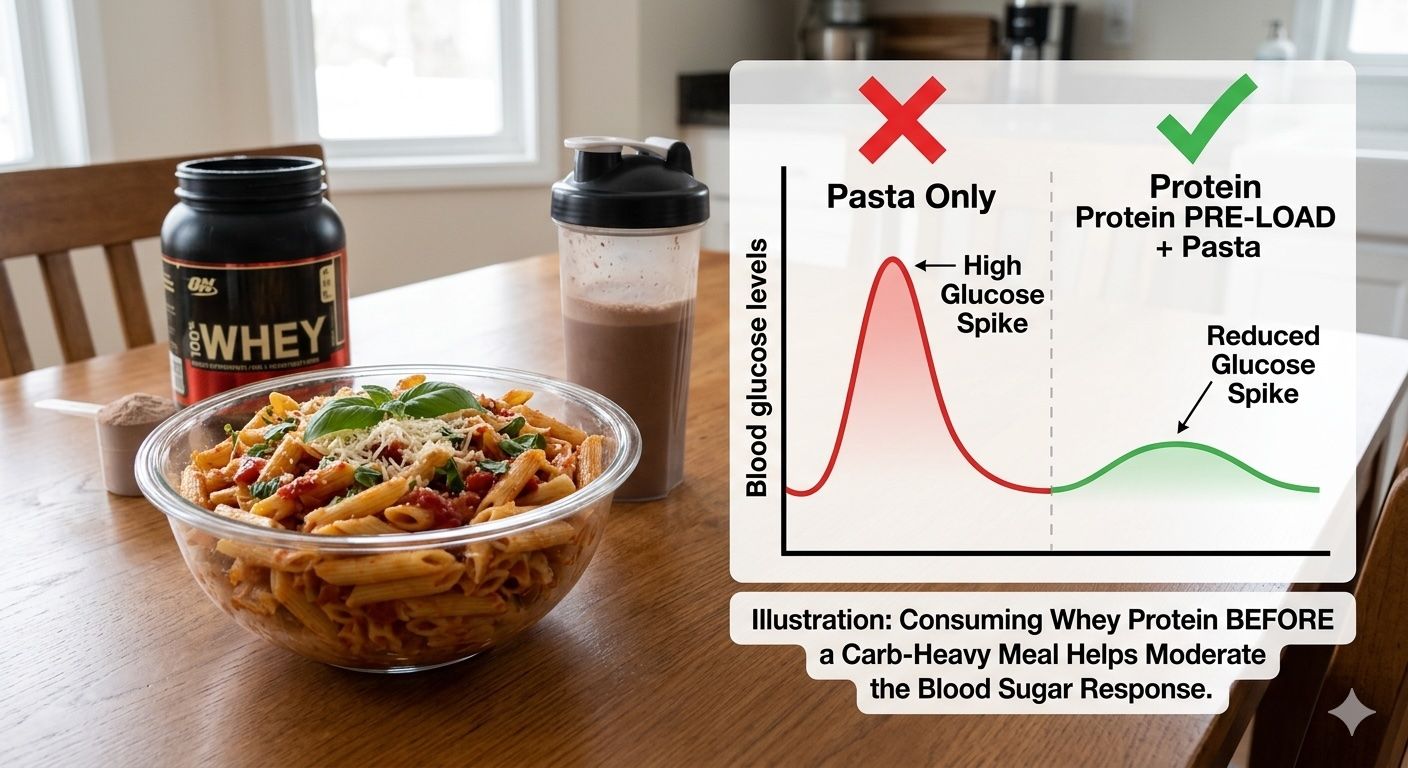
If you take whey protein, you probably think of it as a muscle-building tool. Something you mix into a shake after a workout.
But there's another use case that's getting serious attention in metabolic health research: taking whey protein before a carbohydrate-heavy meal to reduce the glucose spike from that meal.
The effect is real, measurable, and well-documented. And it works through mechanisms that explain a lot about why protein is such a powerful tool for blood sugar management.
Key research finding: Consuming 55g of whey protein 30 minutes before a carbohydrate meal significantly enhanced GLP-1 and insulin secretion, delayed gastric emptying, and reduced post-meal glucose elevation in people with Type 2 diabetes and healthy subjects. (Source: PMC7551485)
What Happens When You Take Whey Protein Before a Carb Meal
Whey protein is a fast-absorbing protein derived from milk. It contains a high concentration of branched-chain amino acids and is digested quickly — which in the context of pre-meal use, is actually an advantage.
When whey protein hits your gut before carbohydrates do, it triggers a cascade that protects your blood sugar:
Step 1: GLP-1 is released
Your gut senses the incoming protein and releases GLP-1 — the same hormone that drugs like Ozempic mimic. GLP-1 tells your pancreas to prepare insulin, tells your stomach to slow down, and tells your brain you're getting full.
Step 2: Gastric emptying slows
With GLP-1 active and protein physically in your stomach, the rate at which food moves from your stomach into your small intestine slows down. This is crucial — slower gastric emptying means glucose enters your bloodstream more gradually rather than all at once.
Step 3: Insulin is already rising when the carbs arrive
Because protein triggers an insulin response even without carbohydrates, by the time rice or bread reaches your bloodstream, your body is already better prepared to handle the glucose. The spike is blunted, and time-in-range improves.
Step 4: The glucose-lowering effect is dose-dependent
Research has shown this effect scales with how much protein you consume before the meal. More protein (up to a point) = stronger GLP-1 response = greater glucose reduction. The studies showing the strongest effects used 25–55g of whey protein.
Whey Protein vs. No Pre-Meal Protein: The GlucoScore Difference
| Meal Setup | GlucoScore | Notes |
|---|---|---|
| Pasta, plain (200g cooked) | 3/10 | No buffer — rapid glucose surge |
| Pasta + side of chicken eaten first | 6/10 | Protein buffer from whole food |
| Whey protein shake 30 min before pasta | 6–7/10 | GLP-1 activated before carbs arrive |
| Whey + vegetables first, pasta last | 7–8/10 | Full sequencing stack — strongest effect |
The whey protein shake pre-meal performs similarly to eating a chicken breast first — and in some cases better, because it's absorbed faster and activates GLP-1 more rapidly.
Does It Work for Non-Diabetics Too?
Yes. The studies showing whey protein's glucose-blunting effect have been conducted in people with Type 2 diabetes and people with normal glucose tolerance. The mechanism is the same — whey protein triggers GLP-1 and slows gastric emptying regardless of your metabolic status.
For people who are health-conscious but not diabetic, this is particularly relevant at high-carb meals: pasta nights, rice-heavy lunches, breakfast with oats or toast. A small protein preload before these meals flattens the curve without changing what you eat.
How to Actually Use This
You don't need to do a clinical protocol. Here are practical ways to apply the pre-meal protein concept:
Option 1: Whey protein shake 20–30 minutes before eating
Mix 25g of plain whey protein with water. No sweeteners, no fruit, no milk — you want the protein alone to activate the GLP-1 response without additional carbohydrates diluting the effect. Drink it before you start cooking or ordering.
Option 2: Eat protein first within the same meal
If a separate shake isn't your thing, the same principle applies to whole-food protein. Eat your chicken, fish, tofu, eggs, or dal before touching the rice or bread. Protein first, carbs last — the mechanism is similar.
Option 3: Combine with vegetables first
The strongest glucose-lowering effect comes from stacking strategies: vegetables → protein → carbs. Whey before the meal, then vegetables, then carbs at the meal hits even harder than either strategy alone.
Option 4: Add whey to your breakfast before the carb component
Stir a small scoop of unflavored or lightly flavored whey into Greek yogurt or a small amount of milk. Eat that first. Then eat your oatmeal, toast, or cereal. Even this partial pre-loading helps.
What About Other Protein Types?
Research has also been done with glutamine (another amino acid) before meals, showing similar GLP-1-enhancing and glucose-lowering effects. Egg protein and casein (slow-absorbing milk protein) also reduce glucose spikes, but to a lesser degree than whey in short-term studies — likely because whey is absorbed faster and reaches the gut more quickly.
For the pre-meal use case, whey is the most studied and most effective protein type. For general meal protein content (chicken, fish, legumes), the effect is real but slower-acting.
Who Should Try This
This approach is especially relevant if you:
- Exercise regularly and already use whey protein — just shift when you take it
- Have prediabetes or elevated fasting glucose
- Regularly eat carb-heavy meals (rice, pasta, bread) without much protein in the meal itself
- Experience energy crashes 1–2 hours after meals
- Have PCOS with insulin resistance, where post-meal glucose management is especially important
Frequently Asked Questions
Does whey protein spike blood sugar?
No — pure whey protein has negligible direct blood sugar impact. It does trigger an insulin response (called the insulin index), but blood glucose itself does not rise significantly from protein alone. In fact, taking it before a carb meal reduces the blood sugar spike from those carbs.
How much whey protein should I take before a meal?
Research showing significant glucose-blunting effects used 25–55g of whey protein. In practical terms, one standard scoop (roughly 25g of protein) 20–30 minutes before a high-carb meal is a reasonable starting point. You don't need to go higher unless you're already comfortable with larger protein intakes.
Can I use plant protein instead of whey?
Plant proteins (pea, hemp, brown rice) are not as well-studied for this specific pre-meal glucose effect. They tend to be slower-absorbing and have lower leucine content, which may reduce the GLP-1 trigger. Whey is the best-evidenced choice for this use case, but plant protein eaten as part of a meal still provides meaningful blood sugar buffering.
Does taking protein before a meal help with weight loss?
Potentially. GLP-1 suppresses appetite and promotes satiety, which is why GLP-1 receptor agonist drugs (Ozempic, Wegovy) cause significant weight loss. Naturally triggering GLP-1 through pre-meal protein won't produce the same magnitude of effect, but it can reduce post-meal hunger and help you eat less at subsequent meals.
How does GlucoSpike incorporate protein tracking?
GlucoSpike AI analyzes the full protein and fiber content of your logged meals and flags when a meal is low in protein — one of the key signals that a glucose spike is likely. You'll see both the GlucoScore and specific feedback on what's missing. Logging your pre-meal protein separately shows you the score improvement.
Curious how your protein timing affects your meal scores? GlucoSpike AI predicts the glucose impact of any meal — including protein preloads. App Store · Google Play
🥗 Get weekly blood sugar tips from GlucoSpike
Practical meal tips, glucose-friendly recipes, and app updates — straight to your inbox. No spam.