 GlucoSpike AI
Post-Meal Walks: Why This 10-Minute Habit Works (And How to Actually Do It)
Stop watching blood sugar spikes after meals. A 10-15 minute walk can flatten glucose peaks by 20-30%. Here's the science and the exact timing that works.
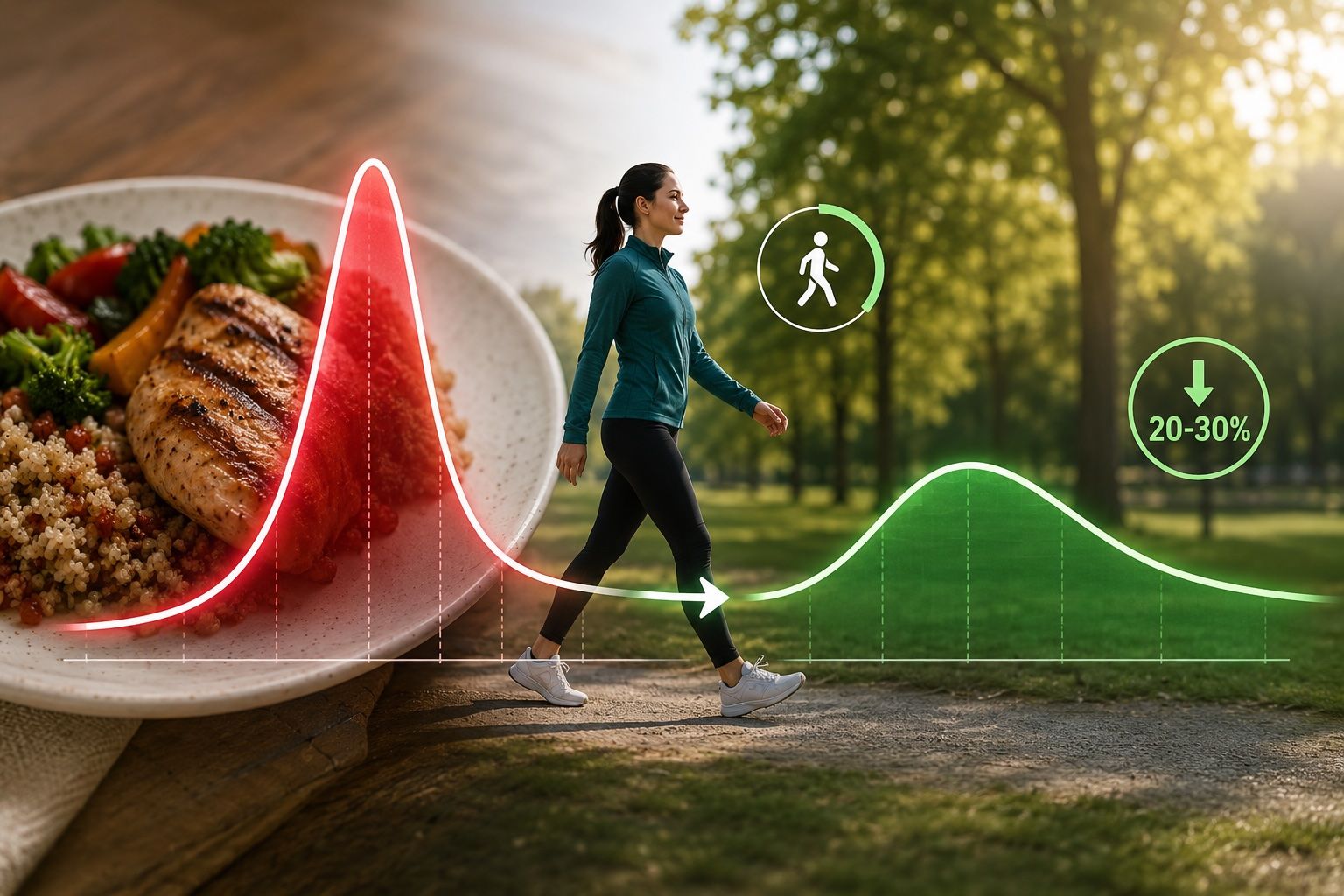
You finish lunch. You sit down. Your glucose spikes to 180.
Then you realize: the research said walking after meals helps. So you wait 15 minutes and take a walk. By 2 hours, your glucose is back to 95.
This isn't luck. This is muscle glucose uptake.
Here's what actually happens
When you eat carbs, your blood glucose rises. Normally, your pancreas releases insulin to push that glucose into cells. But muscle cells have another way to absorb glucose that doesn't require insulin — they need muscle contraction.
When you walk, your leg muscles are contracting. They're pulling glucose directly from your bloodstream without waiting for insulin. This means:
- Lower peak glucose (less spike)
- Faster time-to-baseline (glucose comes down quicker)
- Less insulin demand (easier on your pancreas)
The research backs this up: a 2-minute walk every 15 minutes beats a 30-minute walk after a meal. A 10-minute walk immediately after eating flattens a spike by 20-30% on average.
The timing matters more than you think
This is where Reddit got specific (and it matters):
15-30 minutes after starting to eat — not after you finish. Your glucose is rising. Walk then. You'll catch it on the way up instead of after it's peaked.
If you wait until 1-2 hours after eating, the spike has already happened. The walk helps, but you've already spiked high.
Intensity: Easy walk, 3-4 mph. Not a run. Not a slow stroll. Walking-pace.
Duration: 10-15 minutes minimum. Shorter doesn't seem to move the needle as much.
Real patterns from the community
From the scraper data, the people who got results reported:
- After a carb-heavy meal: 160 -> 120 (with walk) vs. 160 -> 90 (no walk)
- Post-lunch glucose staying under 140 most days when they walk consistently
- Better fasting glucose the next morning after daily post-meal walks (consistent practice lowers baseline)
The consistency part is key. One walk helps. Walking after every meal for a week starts to shift your overall glucose trajectory.
The hard part: actually doing it
"I started taking a walk after meals and my numbers improved" is the easiest sentence to say. Living it is harder.
Real barriers:
- Work: sitting at desk during lunch. Solution: walk 10 min after, even in the office hallway or parking lot
- Weather: can't walk in rain. Solution: indoor mall walking, stair climbing, or resistance exercises at home (they work too, just less efficient)
- Motivation: it feels small. Solution: track it. When you see your CGM trend flatten after a walk vs. without one, small becomes measurable
What about other forms of movement?
Walking specifically is efficient because it's:
- Low barrier (most people can do it)
- Repeatable (low injury risk, easy to do after lunch)
- Time-bounded (10 min is 10 min, no gear needed)
Resistance training works better (more muscle = more glucose uptake), but it's harder to do right after eating.
Intense cardio works but feels like overkill and hard to recover from during a workday.
So walking is the balance: practical, effective, repeatable.
GlucoSpike angle
This is where pattern discovery comes in. Not everyone's glucose responds the same to walking. Some people see a 30% drop. Some see 15%. Some see almost nothing (rare, but it happens).
If you tracked your meals and their glucose impact, you'd see: "This meal spiked me to 180 without a walk, but only 145 with a walk."
That's proof without dogma. That's your own data telling you whether this hack matters for you.
"Sugar-free" doesn't mean spike-free. Scan it and know.
The GlucoSpike app includes a barcode scanner — point your camera at any packaged product and get an instant GS Score showing how it will hit your blood sugar, plus what to grab instead. Product data comes from Open Food Facts, a public nonprofit database: 4M+ products, 150+ countries. Your first 7 scans every week are free.


7 free scans a week · No credit card · See how it works →