 GlucoSpike AI
The $40 Alternative to a CGM for Prediabetes and Blood Sugar Awareness
CGMs cost $1,500–$5,000 a year. But if your goal is understanding how food affects your blood sugar, there's a smarter, more affordable place to start.
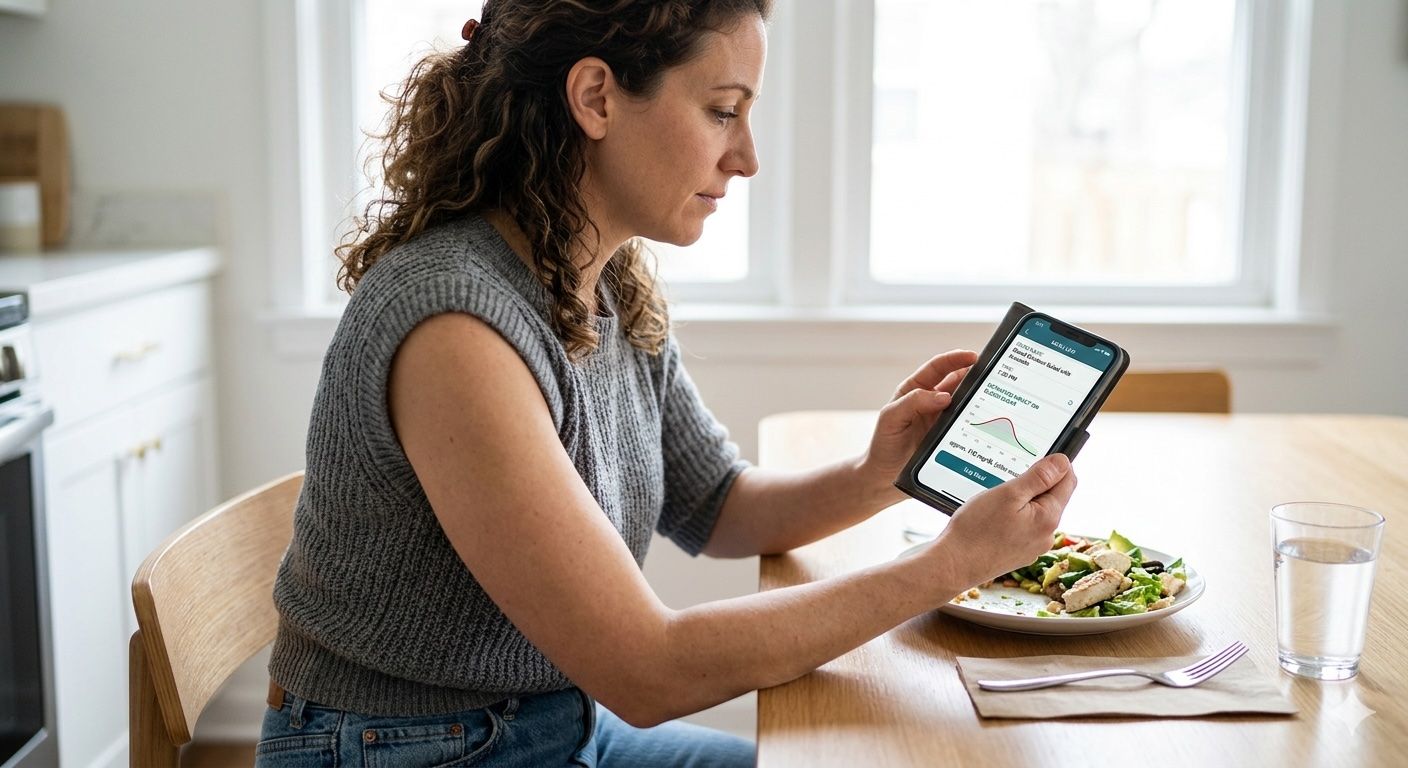
You've heard CGMs are a game-changer. You've seen influencers wearing them on Instagram. You've started researching Dexcom and FreeStyle Libre prices and quietly closed the browser tab in disbelief.
Still curious what a CGM would actually cost you? Check current Dexcom pricing here. View Dexcom pricing →
Here’s the honest truth: for most people with prediabetes or early metabolic concerns, a CGM is more tool than you need right now. And there’s a much cheaper way to get the core insight you’re actually looking for.
Why People Look at CGMs in the First Place
If you’re exploring a CGM without a diabetes diagnosis, you’re probably trying to answer one of these questions:
- Why do I feel tired after certain meals?
- Is my blood sugar spiking more than it should be?
- Which foods are causing problems for me?
- How do I know if I’m making progress?
These are great questions. And a CGM can answer them. But so can a different kind of tool — at a fraction of the cost.
The Real Cost of a CGM Without Insurance
Let’s be clear about what a CGM actually costs if you don’t have insurance coverage:
- FreeStyle Libre 3: ~$1,920/year
- Dexcom G7: ~$3,800–$5,000/year
- OTC options (Stelo, Libre Rio): ~$1,200–$2,400/year
Even the cheapest OTC CGM options run $100–$200/month. And insurance typically only covers CGMs if you’re on insulin or have a formal Type 1 diagnosis. If you have prediabetes or are managing Type 2 with diet, you’re largely paying out of pocket.
For many people, that’s not sustainable. And for building long-term habits, it doesn’t need to be.
What You Actually Need (vs. What CGMs Give You)
A CGM gives you real-time glucose data, 24 hours a day, for every meal, walk, and stressful meeting. That’s powerful if:
- You’re adjusting insulin doses
- You’re trying to prevent dangerous lows
- You need clinical-grade data for your doctor
But if your goal is building awareness around how food affects your blood sugar — that’s a pattern recognition challenge, not a moment-to-moment monitoring challenge.
You don’t need a $2,000/year sensor to know that white rice spikes your glucose more than quinoa. You need a consistent framework for evaluating your meals before you eat them.
GlucoSpike AI: Meal-Level Glucose Awareness Without the Hardware
GlucoSpike AI is a mobile app that scores your meals on a 0–10 scale for glucose impact. We call it the GlucoScore. Higher is better.
Here’s how it works:
- You log a meal (by photo, description, or typing it in)
- GlucoSpike’s AI analyzes the meal’s ingredients, macros, and glycemic profile
- You get a GlucoScore from 0–10 — instantly
- You see which parts of the meal are high-impact vs. low-impact, so you can adjust
No sensor. No skin insertion. No prescription. No waiting 60 minutes for the device to warm up.
Cost: $9.99/month or $39.99/year.
That’s the same as a single day’s worth of a Dexcom G7 sensor.
What GlucoSpike Helps You Do
The app is built specifically for people who are:
- Managing prediabetes through diet and lifestyle
- Working toward weight loss goals while being mindful of blood sugar
- Building better eating habits without obsessing over numbers
- Looking for a stress-free, sustainable approach to glucose awareness
Instead of reading raw glucose graphs (which most people find hard to interpret anyway), you get a simple score that tells you: this meal is a 7 — solid choice, or this meal is a 3 — here’s what’s driving the spike.
Is GlucoSpike a Replacement for a CGM?
Not for everyone. If you’re on insulin, have frequent hypoglycemic episodes, or your doctor has recommended a CGM — get a CGM. That’s the right tool for that situation.
But if you’re in the large middle group — prediabetic, metabolically curious, focused on weight and energy — GlucoSpike fills the gap that CGMs either price people out of or overwhelm them with data.
Think of it as the starting point before the CGM, or the sustainable long-term layer after you’ve done a CGM trial.
Many users find they wear a CGM for a month to understand their personal glucose patterns, then use GlucoSpike long-term to maintain the habits they built.
The Math Is Pretty Simple
| Tool | Annual Cost | What You Learn |
|---|---|---|
| FreeStyle Libre 3 | ~$1,920 | Real-time glucose response to everything |
| Dexcom G7 | ~$3,800+ | Real-time glucose with predictive alerts |
| OTC CGM (Stelo/Libre Rio) | ~$1,200–$2,400 | Real-time glucose, no prescription |
| GlucoSpike AI | $39.99 | Meal-level glucose impact, instantly |
For someone building awareness, the ROI on GlucoSpike is hard to argue with.
How to Get Started
Download GlucoSpike AI and start with your next meal. Log it before you eat and get your GlucoScore. Then try a small change — add vegetables first, swap white rice for less, add protein — and log again. You’ll see the score shift in real time.
Most people find the habit clicks within a week. And unlike a CGM, you don’t need to worry about sensor adhesion, calibration, or a skin reaction on your arm.
Frequently Asked Questions
Is GlucoSpike as accurate as a CGM?
They measure different things. A CGM measures your actual interstitial glucose in real time. GlucoSpike predicts the glucose impact of a meal based on its nutritional composition, glycemic load, and context (pairing, sequence). For the purpose of building food awareness and making better meal choices, GlucoSpike is highly actionable — but it’s not a medical device and doesn’t replace clinical glucose monitoring.
Who should still use a CGM instead of GlucoSpike?
Anyone on insulin, experiencing frequent hypoglycemia, or who has been specifically recommended a CGM by their doctor. For Type 1 diabetes, CGMs are essential. For Type 2 on insulin, they’re often necessary. GlucoSpike is best suited to people managing prediabetes, metabolic health, or weight through dietary changes.
Can I use GlucoSpike alongside a CGM?
Yes — and many users do exactly this. They use a CGM for a month-long trial to understand their personal glucose responses, then switch to GlucoSpike for ongoing meal awareness without the hardware cost.
Does GlucoSpike work for Type 2 diabetes?
Yes. GlucoSpike is used by people with Type 2 diabetes who are managing their condition through diet, with or without medication. The GlucoScore helps identify high-impact meals before eating them, which supports better day-to-day blood sugar control. It’s not a replacement for medical monitoring, but a complementary tool for dietary decision-making.
How is GlucoScore different from glycemic index?
Glycemic index measures a single food in isolation under standardized lab conditions. GlucoScore accounts for the full meal — every ingredient, portion size, protein and fiber content, and how they interact. A meal’s GlucoScore is far more predictive of real-world glucose response than the GI of any individual ingredient.
Ready to start understanding your meals without a CGM? Download GlucoSpike AI — free to try, no hardware required. App Store · Google Play
"Sugar-free" doesn't mean spike-free. Scan it and know.
The GlucoSpike app includes a free barcode scanner — point your camera at any packaged product and get an instant GS Score showing how it will hit your blood sugar, plus what to grab instead. Product data comes from Open Food Facts, a public nonprofit database: 4M+ products, 150+ countries. Free forever.


Scanner free forever · No credit card · See how it works →