 GlucoSpike AI
Is Sugar-Free Red Bull Bad for Diabetes? The Caffeine-Glucose Connection Most People Miss
Sugar-free Red Bull won't directly spike glucose, but its caffeine may reduce insulin sensitivity and make your next meal hit harder. Here's what people with diabetes or prediabetes should know.
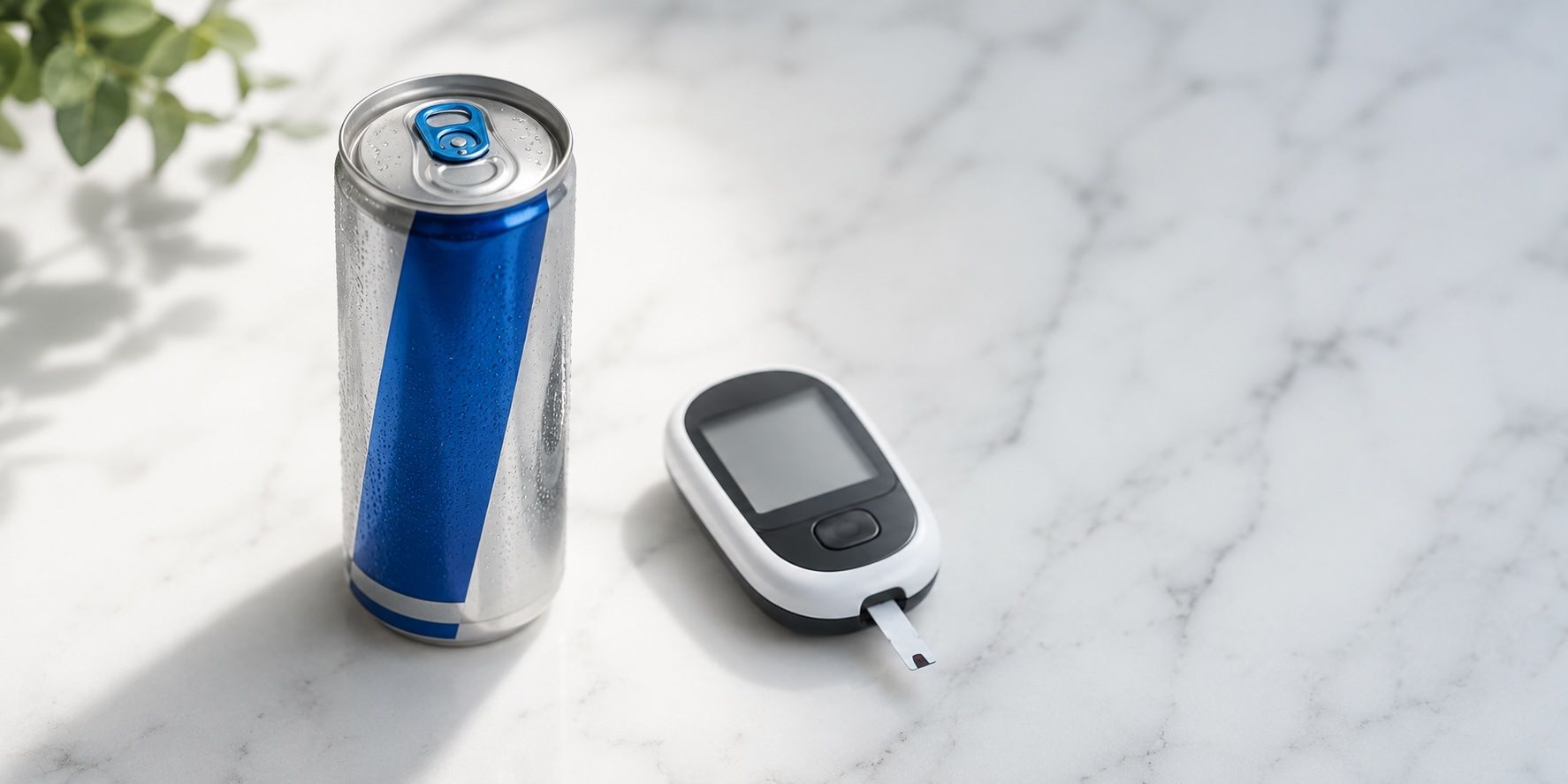
The short answer is: it's complicated. Sugar-free Red Bull won't directly spike your glucose since there's no sugar in it. But "no sugar" doesn't mean "no glucose impact." There are two things happening inside a can of sugar-free Red Bull that matter a lot if you're managing diabetes or prediabetes — and most people only know about one of them.
The Part Everyone Knows: Artificial Sweeteners
Sugar-free Red Bull uses a combination of artificial sweeteners — primarily sucralose and acesulfame-K — instead of sugar. These don't raise blood glucose directly, which is why they're marketed as diabetes-friendly alternatives.
But there's a growing body of research suggesting these sweeteners affect your gut microbiome over time. Your gut bacteria play a direct role in glucose metabolism — so when you disrupt them repeatedly with artificial sweeteners, it can indirectly affect how your body processes glucose from future meals. The effect is subtle and cumulative, not dramatic. An occasional can probably doesn't move the needle. A daily habit over months? That's where it gets murky.
The Part Most People Miss: Caffeine and Insulin Sensitivity
This is the bigger issue for people managing diabetes. Caffeine — even without sugar — affects insulin sensitivity. Specifically, it can temporarily make your cells less responsive to insulin. That means your body has to produce more insulin to manage the same amount of glucose from a meal.
So if you drink a sugar-free Red Bull before lunch, your lunch might spike you higher than it normally would. The energy drink itself didn't cause the spike — but it set the conditions for a bigger one. This is especially relevant for Type 2 diabetics and people with insulin resistance, where insulin sensitivity is already compromised.
Research on caffeine and blood glucose is mixed — some studies show a meaningful effect, others don't. Individual response varies a lot. Some people are highly sensitive to caffeine's glucose impact; others barely notice it. The only way to know where you fall is to test it.
How to Actually Test Your Response
If you're using a CGM, this is easy — log the Red Bull, eat your normal meal, and compare the glucose response to the same meal without the energy drink beforehand.
If you're not on a CGM, you can use an app like GlucoSpike to log your meal and see the predicted glucose impact. Try logging your normal lunch once after a Red Bull and once without — if the scores differ, you have something worth paying attention to. Pattern spotting like this is exactly what catches the sneaky stuff.
The Bottom Line
Sugar-free Red Bull is not good or bad in a clean binary sense. Occasional use is probably fine for most people managing diabetes. Daily use is where the combination of artificial sweeteners affecting gut health and caffeine reducing insulin sensitivity starts to compound quietly.
If you need the caffeine hit, black coffee or green tea are cleaner options. They still carry caffeine's insulin sensitivity effect, but without the artificial sweetener load and the additional compounds in energy drinks that affect gut health.
If you're going to keep the Red Bull in your routine, the most useful thing you can do is track what you eat after it and watch for patterns. Your post-Red Bull meals are the real story.
"Sugar-free" doesn't mean spike-free. Scan it and know.
The GlucoSpike app includes a free barcode scanner — point your camera at any packaged product and get an instant GS Score showing how it will hit your blood sugar, plus what to grab instead. Product data comes from Open Food Facts, a public nonprofit database: 4M+ products, 150+ countries. Free forever.


Scanner free forever · No credit card · See how it works →