 GlucoSpike AI
Am I Prediabetic? A 2-Minute Self-Check (Plus What to Do Next)
A quick self-check for prediabetes risk factors, what your score means, and what actually helps if you land in the moderate-to-higher range.
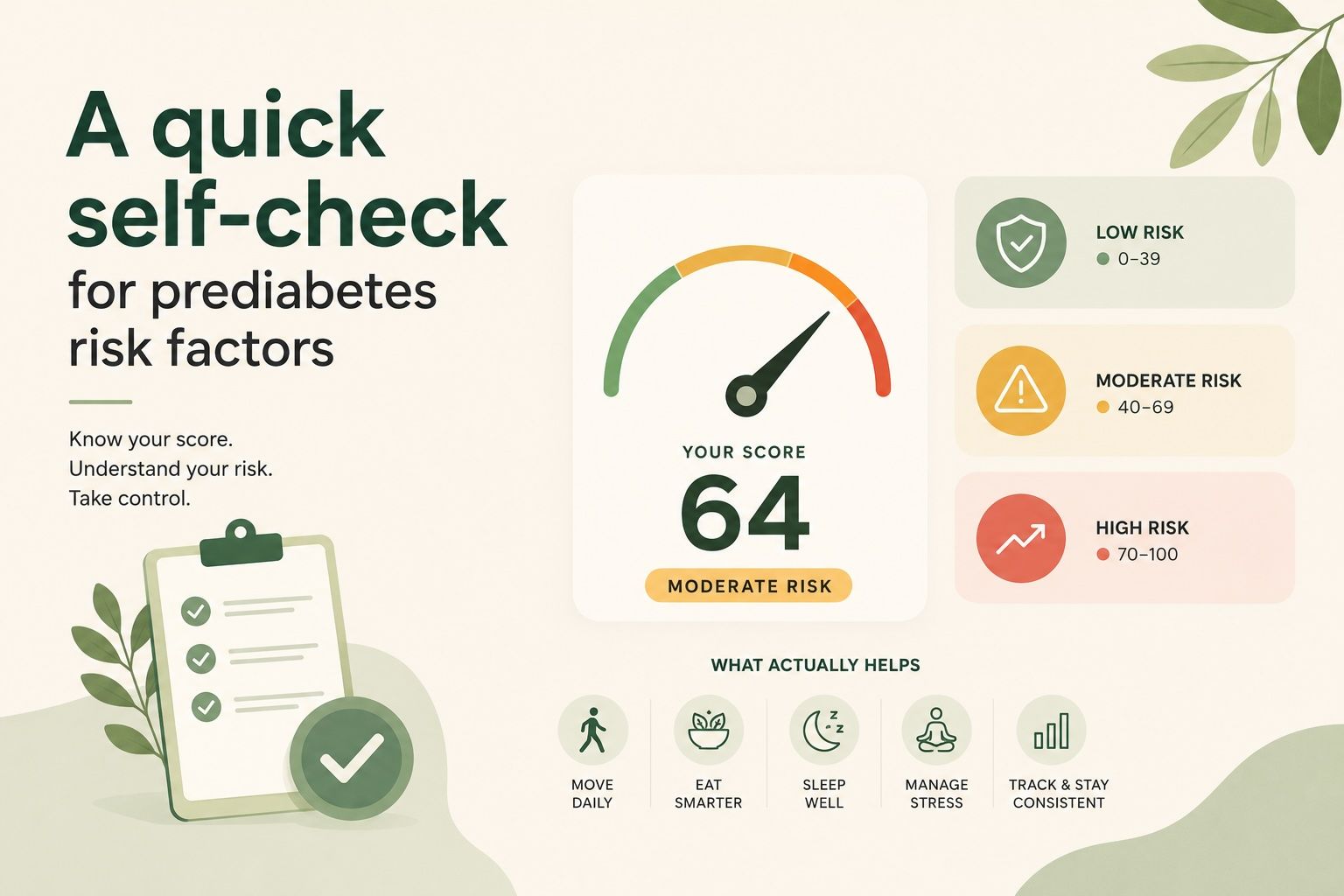
You don't need a lab result to start asking this question seriously. If you're searching "am I prediabetic," some part of you already suspects the answer. Here's a quick way to check, and what actually matters if the answer is yes.
The self-check
Give yourself one point for each that's true:
- You're 35 or older.
- You carry extra weight around your waist, regardless of your overall size.
- A parent or sibling has type 2 diabetes.
- You've been told you have high blood pressure or high cholesterol.
- You had gestational diabetes, or had a baby over 9 lbs.
- You're mostly sedentary, fewer than 3 days of real activity a week.
- You crash hard 1-2 hours after carb-heavy meals, tired, foggy, or shaky.
- You've noticed increased thirst, more frequent urination, or slower healing than usual.
- 0-2: Lower risk, worth a casual check at your next physical.
- 3-4: Moderate risk. An A1c or fasting glucose test is a reasonable ask at your next visit.
- 5+: Higher risk. This is worth an actual conversation with a doctor, not just a note to yourself.
This isn't a diagnosis, it's a nudge. The only way to know for sure is an A1c or fasting glucose blood test.
Why "prediabetes risk test" searches spike so much
A lot of people land here because something felt off, a number on a home glucose check, a comment from a doctor, that 2pm crash that's become routine, and they want a fast, low-stakes way to gauge how seriously to take it before booking an appointment. That instinct is a good one. Prediabetes has no dramatic symptoms most of the time, which is exactly why it goes unnoticed for years.
What actually helps if you land in the moderate-to-higher range
Two things move the needle before you ever need medication: what you eat, and understanding why certain meals hit you harder than others. Most people don't need to overhaul their whole diet, they need to see which specific foods and combinations are doing the damage, since it's rarely "carbs" in general, it's a handful of repeat offenders.
That's the part GlucoSpike is built for. Scan or photograph a meal before you eat it, and it gives you a sense of the likely blood sugar impact, so you start noticing the pattern in your own food instead of guessing. Pair that with the self-check above and an actual conversation with your doctor, and you've got a realistic starting point.
Take the full prediabetes risk assessment
This is an educational self-check, not a medical diagnosis. If you scored in the moderate or higher range, talk to a doctor about an A1c or fasting glucose test.
"Sugar-free" doesn't mean spike-free. Scan it and know.
The GlucoSpike app includes a barcode scanner — point your camera at any packaged product and get an instant GS Score showing how it will hit your blood sugar, plus what to grab instead. Product data comes from Open Food Facts, a public nonprofit database: 4M+ products, 150+ countries. Your first 7 scans every week are free.


7 free scans a week · No credit card · See how it works →