 GlucoSpike AI
 · Chai
Tapioca Starch vs Corn Starch: Blood Sugar Impact and Better Swaps
Discover how tapioca starch vs corn starch affect your blood sugar, the science behind refined starches, and smart low-glycemic swaps for your kitchen.
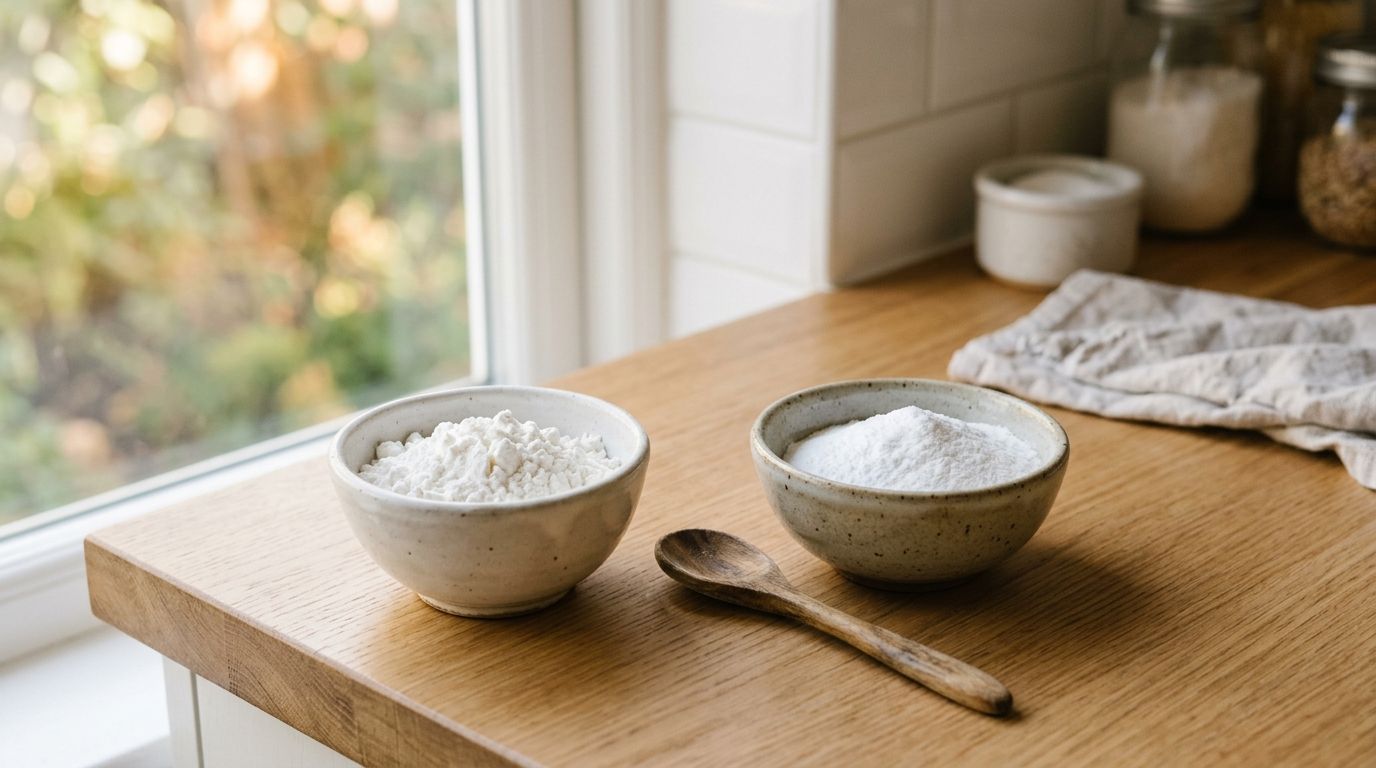
When comparing tapioca starch vs corn starch, both ingredients cause a rapid rise in blood sugar because they are highly refined carbohydrates stripped of fiber, protein, and fat. While they perform differently in recipes, your body processes both of them into glucose very quickly. Choosing the right thickener or baking alternative depends on understanding their structural differences and how to balance their metabolic impact.
What is the difference between tapioca starch and corn starch?
Corn starch is a fine white powder extracted from the endosperm of corn kernels. The production process involves soaking, grinding, and washing the kernels to separate the pure starch from the plant protein, fiber, and germ. The result is an ingredient that is almost one hundred percent carbohydrate, consisting of two molecules known as amylose and amylopectin.
Tapioca starch is extracted from the tuberous root of the cassava plant. To make it, manufacturers peel, crush, wash, and dry the root pulp into a fine powder. Like its corn-based counterpart, tapioca starch is nearly pure carbohydrate and is naturally gluten-free, making it a popular staple in gluten-free baking.
How do these starches affect your blood sugar?
The biological mechanism behind starch digestion explains why both ingredients cause a swift rise in blood glucose. When you consume refined starches, salivary and pancreatic enzymes called amylases immediately break the chemical bonds holding the glucose molecules together. Because there is no dietary fiber, fat, or protein present to slow down digestion, the glucose enters your bloodstream almost instantly.
On the glycemic index, which measures how rapidly a food increases blood sugar compared to pure glucose, both starches score very high. Corn starch has a glycemic index of approximately 85 to 90, while tapioca starch scores around 80 to 85. For comparison, table sugar has a glycemic index of about 65, meaning these refined baking starches can cause a sharper spike than standard sweeteners.
The role of amylose and amylopectin
The ratio of amylose to amylopectin in a starch determines how it behaves in a recipe and how fast your body digests it. Amylose is a straight chain of glucose molecules that digests relatively slowly. Amylopectin is a highly branched chain that offers more surface area for digestive enzymes to attack, leading to a faster blood sugar response.
- Corn starch contains about 25 percent amylose and 75 percent amylopectin, giving it strong thickening power but a rapid digestion rate.
- Tapioca starch contains roughly 17 percent amylose and 83 percent amylopectin, making it digest even faster while providing a chewy texture in baked goods.
How to minimize glucose spikes when using starches
You do not have to banish these starches from your kitchen entirely to maintain stable energy levels. The key is to change how you prepare and pair your meals. By using food synergy, you can buffer the glycemic impact of these high-starch ingredients.
Pairing starch with soluble fiber, healthy fats, and quality proteins slows down gastric emptying. When your stomach empties its contents into the small intestine at a slower rate, glucose absorption slows down. This prevents the sharp spike and subsequent energy crash that often follows a high-starch meal.
Smart kitchen swaps for better blood sugar
If you want to replace corn starch or tapioca starch in your cooking, several low-glycemic alternatives work exceptionally well as thickeners or baking binders.
- Xanthan gum or guar gum: These soluble fibers require only a tiny fraction of a teaspoon to thicken sauces without adding carbohydrates.
- Psyllium husk: Excellent for gluten-free baking, psyllium provides the binding stretch of tapioca starch while adding beneficial prebiotic fiber.
- Almond flour or coconut flour: These nut and seed flours can replace starch in baking mixes, dramatically reducing the overall glycemic load.
- Glucomannan konjac powder: A zero-net-carb thickener that behaves similarly to corn starch when heated in soups and gravies.
Predicting your response with GlucoSpike
Everyone reacts to carbohydrates differently based on their unique metabolic health, muscle mass, sleep quality, and gut microbiome. While population studies give us a general baseline, your individual response to tapioca starch vs corn starch may vary.
GlucoSpike helps you see how a meal will affect your blood sugar before you take your first bite. By analyzing your meal composition, our AI predicts the estimated glucose impact of recipes containing these starches. This allows you to experiment with different swaps and portion sizes, moving from guessing to knowing.
Frequently asked questions
Is tapioca starch healthier than corn starch for people with diabetes?
Tapioca starch is not significantly healthier than corn starch for blood sugar management. Both are highly refined carbohydrates that lack fiber, protein, and fat, meaning they both cause rapid blood glucose spikes when consumed in isolation.
Can I use almond flour instead of corn starch to thicken sauces?
Almond flour does not thicken sauces the same way corn starch does because it lacks the gel-forming properties of pure starch. For a low-carb thickener, xanthan gum, glucomannan powder, or a reduction of heavy cream or butter are much better options.
Does cooking and cooling starch reduce its blood sugar impact?
Cooking and then cooling certain starches can create resistant starch, which digests more slowly and has a lower glycemic impact. However, this effect is much stronger in whole foods like potatoes and rice than it is in highly processed powders like commercial corn starch or tapioca starch.
"Sugar-free" doesn't mean spike-free. Scan it and know.
The GlucoSpike app includes a free barcode scanner — point your camera at any packaged product and get an instant GS Score showing how it will hit your blood sugar, plus what to grab instead. Product data comes from Open Food Facts, a public nonprofit database: 4M+ products, 150+ countries. Free forever.


Scanner free forever · No credit card · See how it works →