 GlucoSpike AI
 Protein Intake Calculator
How many grams of protein should you eat per day? It depends on your weight, how active you are, your goal, and how your body handles glucose. This free calculator gives you a personalized daily protein target in grams, tuned for fat loss, muscle gain, prediabetes, type 2 diabetes, or PCOS — with a simple per-meal breakdown.
Educational estimate only, not medical advice. Nothing you enter is stored or sent anywhere.
Prefer to skip the math? The GlucoSpike app sets a personalized protein target for you and counts every gram automatically. Get the app →
The next step
A number is the start. Every meal is where you hit it.
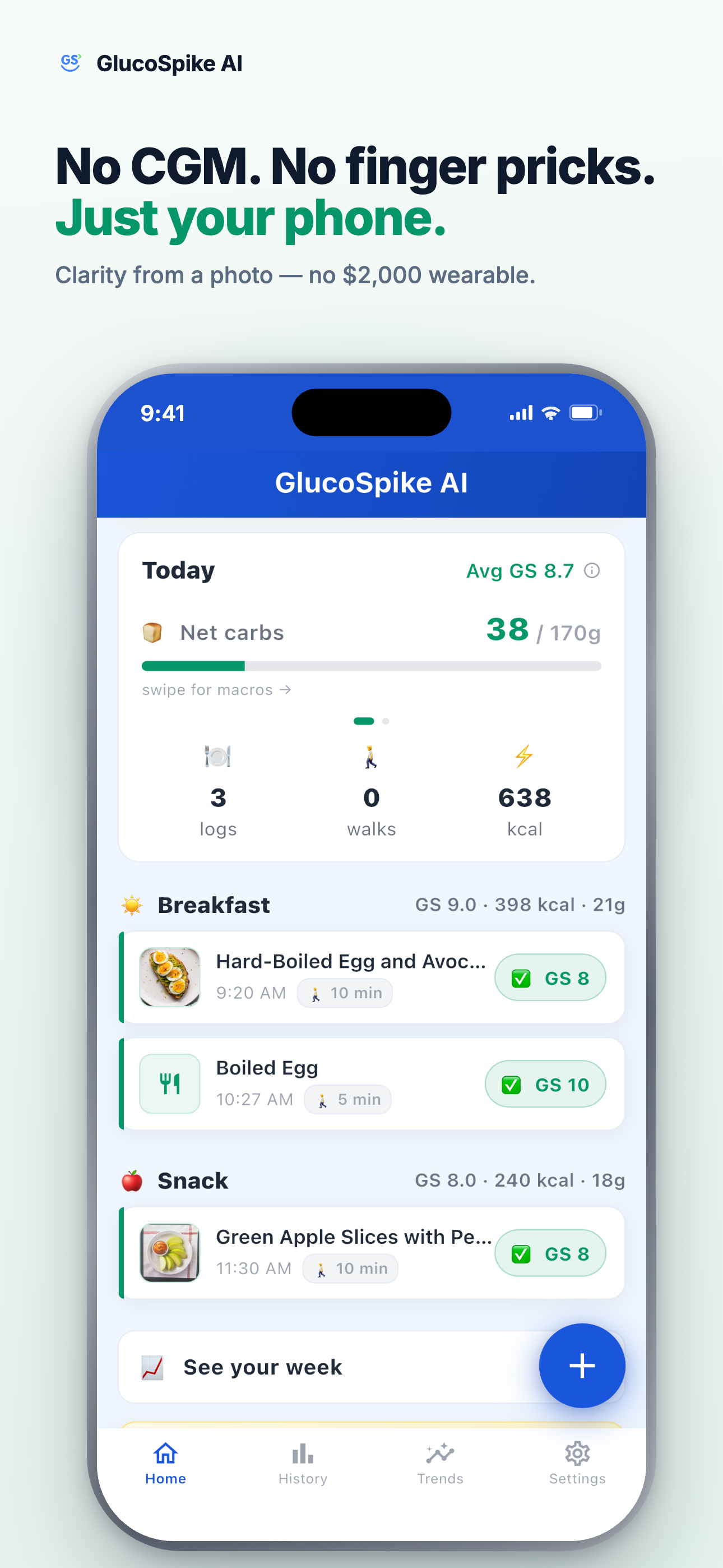
Hitting 130 g of protein sounds easy until you're tracking it by hand. GlucoSpike counts the protein in every meal from a photo — and shows how eating it before your carbs flattens the glucose spike that follows.
- Snap your meal, get the protein count Grams of protein estimated from a photo in about 5 seconds — no weighing or label-reading.
- Watch your protein fill up against your target Daily protein tracked against your goal, meal by meal — right on the home screen.
- See protein and glucose together A 0–10 GlucoScore on every meal shows how your protein-first plate steadies blood sugar — no CGM needed.


Free to try · no CGM or wearable needed
Why the RDA Is a Floor, Not a Target
The official Recommended Dietary Allowance for protein is 0.8 grams per kilogram of body weight. But that number was set to prevent deficiency in the average sedentary adult — it is the minimum to avoid a problem, not the amount that helps you thrive. If you exercise, are trying to lose fat without losing muscle, or want to build strength, the research consistently points higher.
Your ideal intake scales with your body weight and your goal. Active adults and those in a calorie deficit do well around 1.2 to 1.6 grams per kilogram, while people building muscle with resistance training benefit from 1.6 to 2.2 g/kg. Adults over 65 need more than younger adults to counter the gradual muscle loss that comes with age.
How you spread protein matters too. Aiming for a solid dose at each meal, rather than a small breakfast and a huge dinner, gives your body a steadier supply for muscle repair. And because protein barely moves blood sugar, eating it before your carbs is one of the simplest ways to flatten the spike that follows a meal.
That last point is why protein is especially useful if you have prediabetes, insulin resistance, type 2 diabetes, or PCOS. It keeps you full while you moderate carbs, helps preserve muscle, and steadies post-meal glucose. This calculator nudges the target up modestly for those profiles. The one exception is diabetic kidney disease, where protein may need to be limited — so if that applies to you, set your target with your care team.
Frequently Asked Questions
How many grams of protein should I eat per day? ▾
The RDA of 0.8 grams per kilogram of body weight is a floor set to prevent deficiency, not an optimal target. Most research supports more: roughly 1.2 to 1.6 g/kg for active adults or those losing weight, and 1.6 to 2.2 g/kg for building muscle with resistance training. For a 70 kg (154 lb) person that is about 85 to 155 grams a day depending on your goal. This calculator estimates your personal range from your weight, activity level, and goal.
How does this protein calculator work? ▾
It takes your body weight and applies a grams-per-kilogram range based on your activity level and goal. Sedentary maintenance sits near the RDA, while a calorie deficit or a muscle-building goal shifts the range higher to protect or grow lean muscle. If you are over 65 it nudges the target up, because older adults need more protein to counter age-related muscle loss.
How much protein do I need to lose weight? ▾
When you eat in a calorie deficit, higher protein — often 1.4 to 2.0 g/kg — helps in two ways: it preserves the muscle you would otherwise lose, and it keeps you fuller so the deficit is easier to sustain. Protein is also the most thermogenic macronutrient, meaning your body burns slightly more digesting it than it does with carbs or fat.
How much protein do I need to build muscle? ▾
For muscle growth, most evidence points to 1.6 to 2.2 g/kg of body weight per day, paired with progressive resistance training. Going much beyond 2.2 g/kg has not been shown to add more muscle. Just as important as the total is spreading it across the day — aiming for a meaningful dose of protein at each meal rather than loading it all at dinner.
How much protein per day for prediabetes or insulin resistance? ▾
There is no single official number, but protein plays a helpful role. Because it barely raises blood glucose, it lets you keep meals satisfying while moderating carbs, and eating it before your carbs blunts the post-meal spike. A common starting point is roughly 1.2 to 1.6 g/kg of body weight, favoring lean sources like fish, poultry, eggs, Greek yogurt, tofu, and legumes. This calculator nudges the range up slightly when you select a prediabetes or insulin resistance profile.
How much protein per day for type 2 diabetes? ▾
For most people with type 2 diabetes and normal kidney function, adequate protein — often around 1.2 to 1.6 g/kg — supports satiety and steadier glucose as carbs come down, without directly raising blood sugar much. The important exception is diabetic kidney disease (diabetic nephropathy): if you have reduced kidney function, protein may need to be limited, so set your target with your doctor or dietitian rather than pushing it higher.
Is protein good for PCOS? ▾
Many people with PCOS have some degree of insulin resistance, so a higher-protein, lower-glycemic eating pattern is a common recommendation. Protein supports satiety, helps with body composition, and — paired with moderating refined carbs — steadies blood sugar and insulin. A moderate target of roughly 1.2 to 1.6 g/kg is a reasonable starting point for most.
Can eating too much protein be harmful? ▾
For healthy people with normal kidney function, high-protein diets have not been shown to harm the kidneys. However, if you have chronic kidney disease, diabetic kidney disease, or are pregnant, your protein needs are different and should be set with your doctor. Very high intakes can also crowd out other foods, so balance still matters.
Does protein raise blood sugar? ▾
Protein has very little direct effect on blood glucose in most people — far less than carbohydrates. In fact, eating protein before or alongside carbs slows digestion and blunts the post-meal glucose spike. That is why a protein-first meal order is one of the simplest ways to steady your blood sugar, and it is exactly what GlucoSpike is built to help you see, meal by meal.
This calculator provides a general educational estimate based on population-level guidance. It is not medical or nutritional advice, and it cannot account for your medications, lab results, pregnancy, kidney disease, or other individual factors. If you have kidney disease, diabetes, or any medical condition, consult your doctor or a registered dietitian before changing your protein intake.