 GlucoSpike AI
 · Chai
How a CGM Works: Lifespan, Accuracy, and Keeping Your Sensor Secure
Curious about how a CGM works, how long it lasts, and what to do when it starts peeling off in hot weather? Here is a practical, science-backed guide to keeping your sensor secure.
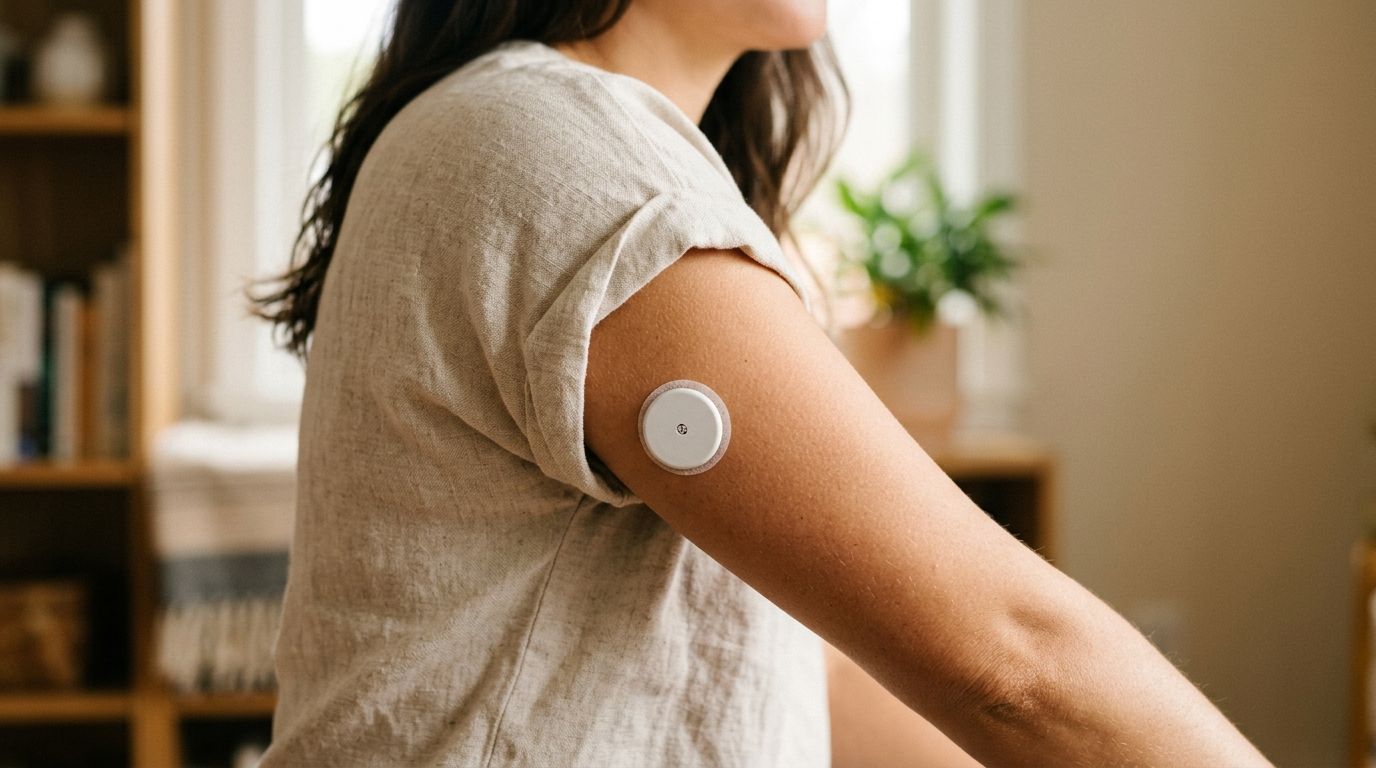
If you have ever wondered how a CGM works, the magic lies in a tiny, flexible filament that sits just beneath your skin. Continuous glucose monitors (CGMs) do not actually measure your blood directly. Instead, they track glucose in the fluid between your cells, providing a steady stream of data to help you see trends before they become spikes.
Understanding how a CGM works can help you make sense of your daily readings, troubleshoot common accuracy issues, and keep the sensor firmly attached for its entire lifespan. Let us look at the science behind these devices and some practical tips to get the most out of your tracking.
How does a CGM measure your glucose?
A continuous glucose monitor relies on three main components to deliver real-time data: a sensor, a transmitter, and a receiver (such as your smartphone). The sensor is applied using an applicator that inserts a tiny, hair-like wire just under the skin into the subcutaneous fat layer.
This wire is coated with an enzyme called glucose oxidase. When glucose in your interstitial fluid reacts with this enzyme, it creates a tiny electrical current. The transmitter, which sits on top of the sensor, measures this current and translates it into a glucose reading, sending it wirelessly to your phone.
Because interstitial fluid is different from blood, there is a natural delay in the readings. When you eat a meal, glucose enters your bloodstream first, then moves into the interstitial fluid. This lag time usually ranges from 5 to 15 minutes, which is why a CGM reading might temporarily differ from a traditional finger-prick blood test.
How long does a CGM sensor last?
Most commercial CGM sensors are designed to work for 10 to 14 days, depending on the specific brand and model. Once this period ends, the chemical enzyme on the filament degrades, and the device automatically shuts down to prevent inaccurate readings.
Your body also plays a role in the sensor lifespan. Over time, your immune system recognizes the sensor filament as a foreign object and begins to build up microscopic tissue around it, which eventually blocks the chemical reaction needed to read glucose levels.
Why do CGM sensors peel off in hot weather?
Continuous glucose monitor (CGM) sensors peel or fall off in hot weather because sweat and humidity break down the adhesive bond to the skin. When temperatures rise, several factors work together to compromise your sensor's stability.
- Sweat breakdown: Moisture from sweat weakens the medical-grade glue, causing the edges of the tape to lift.
- Temperature limits: Direct sun can push the sensor surface past its operating limit, making the tape peel.
- Enzyme activity: High heat can also cause temporary false high readings by speeding up the sensor's internal chemical reaction.
How to keep your CGM attached
Keeping your sensor secure in the heat requires a proactive approach to skin preparation and protection. You can significantly improve adhesive life by following a few simple steps during application.
- Clean the skin: Wash the area with plain soap, dry completely, and let rubbing alcohol evaporate fully before applying the sensor.
- Use skin prep: Apply an adhesive enhancer like Skin Tac or an antiperspirant wipe to the area before placement to create a tacky, sweat-resistant barrier.
- Add an overpatch: Place an overpatch or medical tape over the sensor edges for extra security against friction and moisture.
- Press firmly: Hold the sensor down for 30 seconds after insertion to activate the heat-sensitive glue, and avoid heavy sweat for the first hour.
What are the most common CGM issues?
While continuous glucose monitors are highly reliable, users often encounter a few common challenges during their first few weeks of wearing a sensor. Understanding these issues can prevent unnecessary worry.
- Compression lows: If you sleep directly on your sensor, the physical pressure can push fluid away from the area, causing a sudden, false drop in your glucose readings.
- First-day inaccuracy: The body experiences mild inflammation right after insertion, which can make readings fluctuate or run slightly lower during the first 24 hours.
- Dehydration: Because the sensor measures fluid between your cells, being dehydrated can artificially concentrate or alter your glucose readings.
- Adhesive peeling: Sweat, water, and friction from clothing can cause the edges of the sensor patch to lift before the 10 or 14 days are up.
What should you do when your CGM is coming off?
If you notice the edges of your sensor adhesive starting to peel, you do not have to throw it away immediately. Taking quick action can save the sensor and keep your tracking on schedule.
First, avoid pulling at the loose edges, as this can dislodge the delicate filament underneath. Instead, carefully clean the skin around the lifting adhesive with a damp cloth and let it dry completely. Apply a medical-grade overpatch directly over the sensor to seal it back down.
How GlucoSpike fits into your tracking routine
While a CGM measures your current interstitial glucose, GlucoSpike uses advanced AI to predict your glucose response before you even eat. By combining historical data with meal composition, GlucoSpike helps you see the future impact of your food, turning a reactive measurement tool into a proactive planning partner.
Frequently asked questions
Does a CGM hurt to put on?
Most users report that applying a CGM feels like a quick pinch, similar to a minor skin prick. The insertion needle is incredibly thin and retracts instantly, leaving only the flexible, thread-like filament under your skin.
Can you shower or swim with a CGM?
Yes, modern CGM sensors are water-resistant and designed for daily activities like showering, bathing, and swimming. However, prolonged submersion in deep water or high-pressure hot tubs can weaken the adhesive or damage the transmitter.
Why does my CGM show a different number than a finger prick?
A finger prick measures glucose directly from your blood, while a CGM measures glucose in the interstitial fluid between your cells. Because it takes time for glucose to move from your blood into this fluid, there is a normal lag time of 5 to 15 minutes between the two readings.
"Sugar-free" doesn't mean spike-free. Scan it and know.
The GlucoSpike app includes a barcode scanner — point your camera at any packaged product and get an instant GS Score showing how it will hit your blood sugar, plus what to grab instead. Product data comes from Open Food Facts, a public nonprofit database: 4M+ products, 150+ countries. Your first 7 scans every week are free.


7 free scans a week · No credit card · See how it works →